Keep a Product Decision Log with Evidence and Reversal Rules
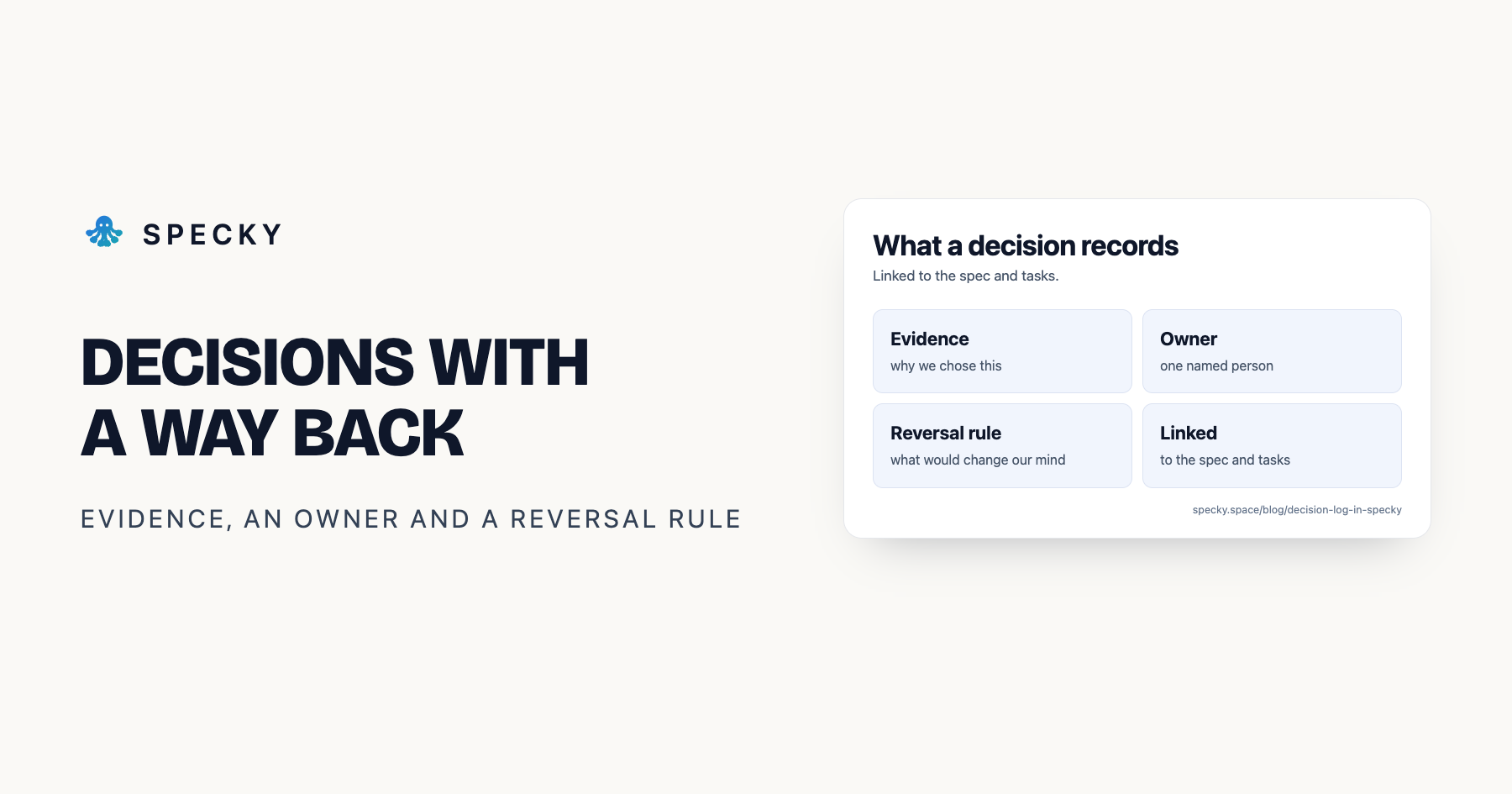
Specky records each product decision with its evidence, one named owner and the condition that would reverse it, linked to the spec, tickets and outcome check.
Three months after a call, a new teammate asks why you built custom exports before the permissions model. The reason lived in a chat thread and one person's memory. Now the team spends an hour rebuilding the argument, or worse, makes the opposite call by accident.
What it does
- Records each decision with the evidence that shaped it: the customer signal, metric or research the team had at the time.
- Gives every decision one named owner. A decision an AI proposed stays unowned until a person takes it.
- Lets you write reversal criteria, the condition that would change your mind, before you build. Specky watches new signals for it, and when it may have been met, the decision comes back to your inbox.
- Links the spec, tickets and outcome check back to the decision, so the reason travels with the work.
How it works in practice
You decide to build custom exports first. You record the call with the evidence in front of you, such as the requests and research that pushed it up the list. You are the owner.
Then you write what would make you wrong. For example, a rise in permission-related requests from the customers you care about most.
As the work moves, you attach the spec, the tickets and the metric it should move. Months later, anyone can open the decision and see what was chosen, who chose it, what was known, and what would reverse it.
If new signals suggest your condition may have been met, the decision lands back in your inbox with the new evidence attached, ready to be reopened.
From Claude or ChatGPT, ask "log a decision in Specky: we are building custom exports before permissions, because..." and the connector writes it to the decision log with its rationale.
Where it stops
- Specky does not make the decision. You make the call, and Specky keeps the record connected to the evidence and the work.
- It is not a meeting summary. A summary records what was said; a decision records what was chosen, by whom, on what evidence, and what would reverse it.
Try it
Start with one real decision. Add its evidence, its owner and the condition that would change it. See the full record on the feature page.
Want the log as a board next to your chat? The decision log board builds one in Claude from the same decisions.
Keep reading
How PMs Should Annotate AI Outputs: Separate Product Failures from Preferences
A practical review method for AI products: separate policy failures, missing context, and personal preferences so real output feedback can shape better product behavior.
AI Agent Handoff: When Your Product Should Ask, Act or Stop
Decide when an AI agent should ask, act within clear bounds, or stop and hand control to a person, with real data on how agents and users share control and a contract you can copy.
How to Choose a Product Experiment: 55 Methods by Risk and Evidence
Most ideas lose when tested. Name the riskiest belief, decide how strong the evidence must be, then pick the cheapest of 55 product experiments that gets you there.