AI product management
Understand the AI product manager role, choose practical tools, and keep customer evidence in the loop.
Practical guides for founders, first PMs, product engineers, and product builders: discover customer problems, decide what to build, and ship with AI.
Field guides for small teams building software, AI products, and better product habits.
Understand the AI product manager role, choose practical tools, and keep customer evidence in the loop.
Connect customer evidence, small-team workflows, and AI feature delivery from the first problem through a useful release.
Decide where AI fits, define quality and risk, and improve the feature after launch.
Practical workflows for people close to the code: learn from users, choose a small bet, and give coding agents useful context.
Turn customer signals into a focused plan, and test whether people value what your team is building.
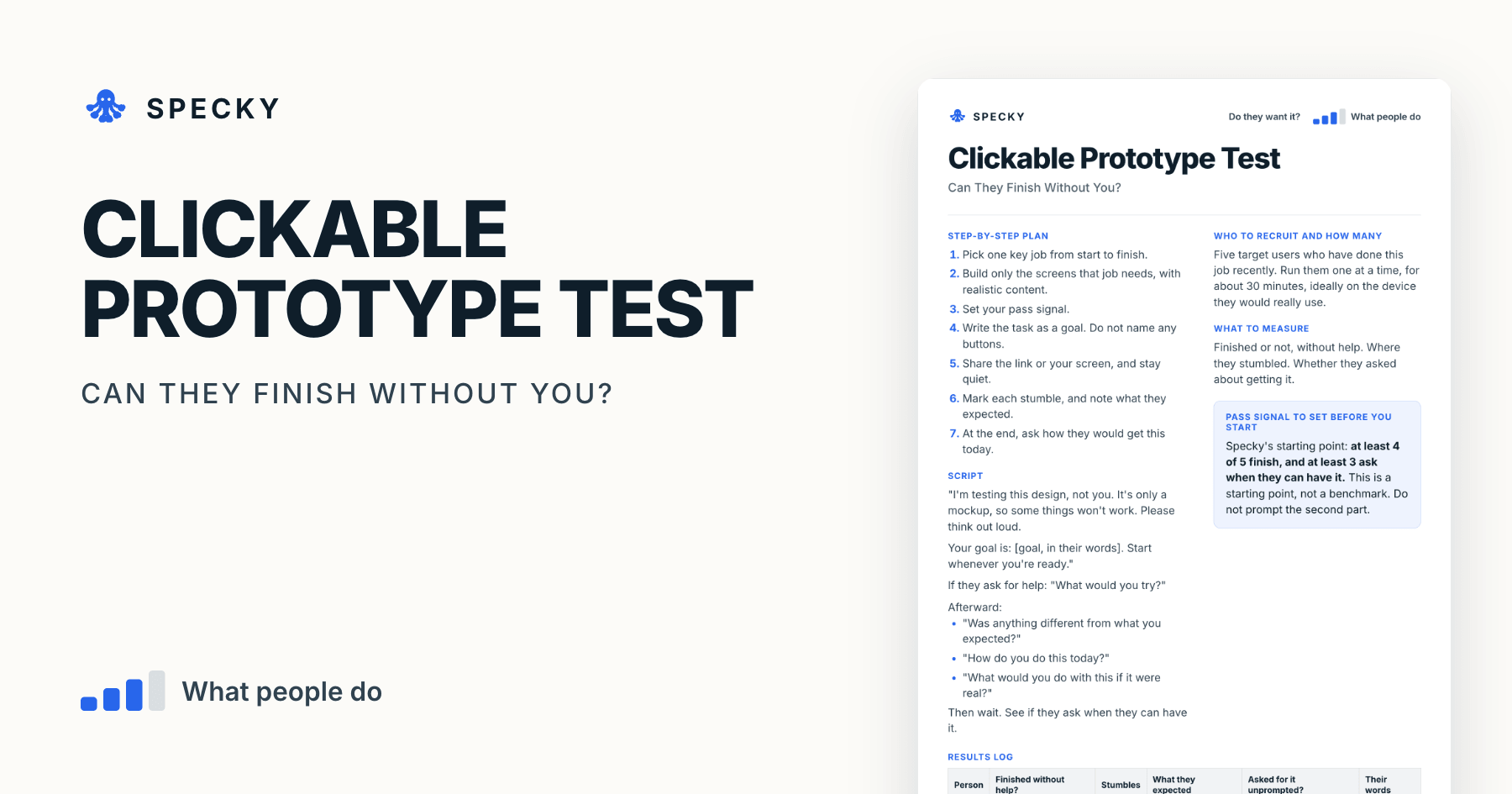
Your prototype will pass every test if you help it. Here is how to find out whether people can finish without you, and whether anyone asks for it.
Practical guides, product frameworks, and Specky updates — sent when it’s worth your time.
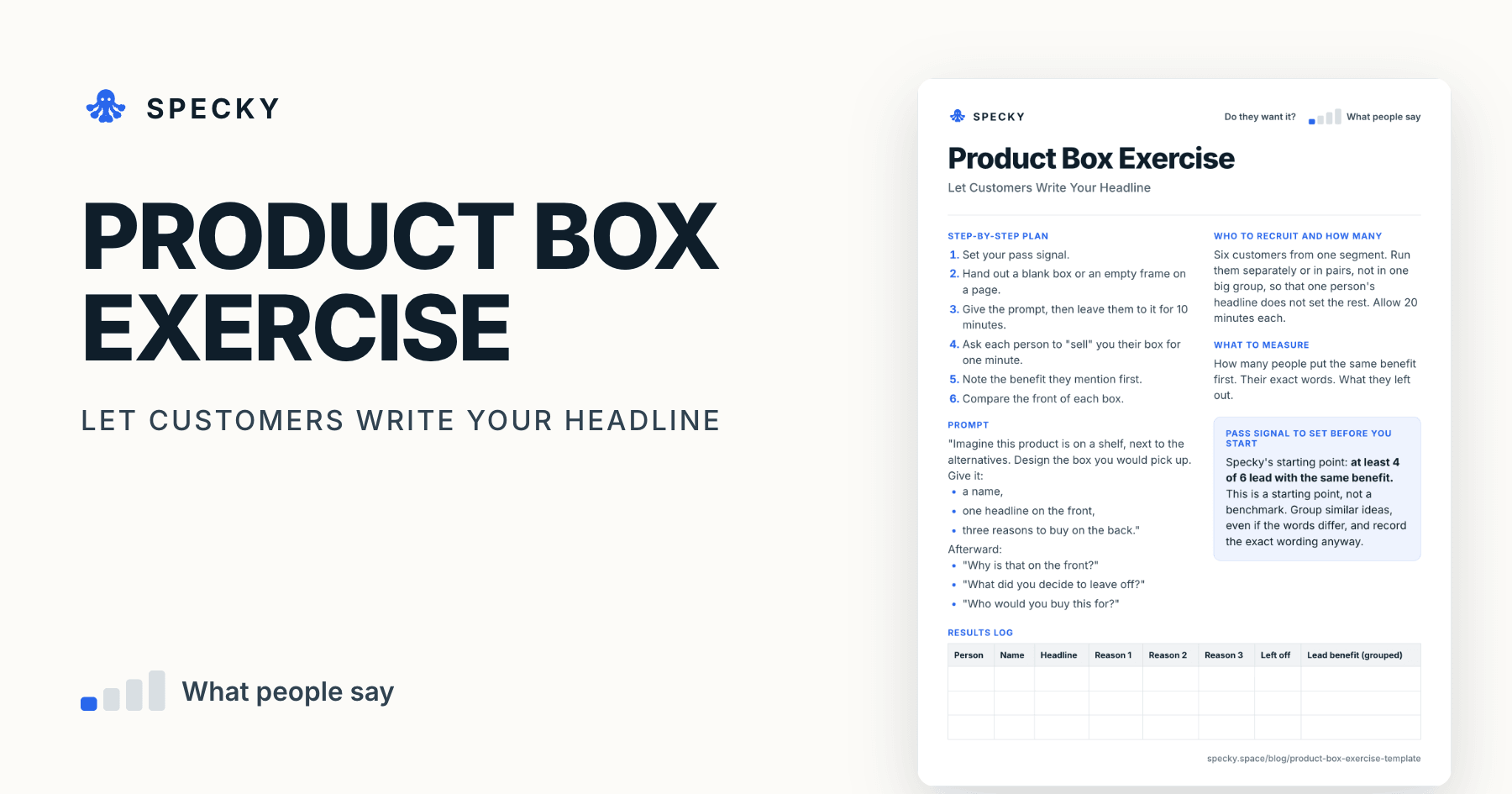
Your team has argued about the headline for weeks. Your customers could write it in ten minutes.
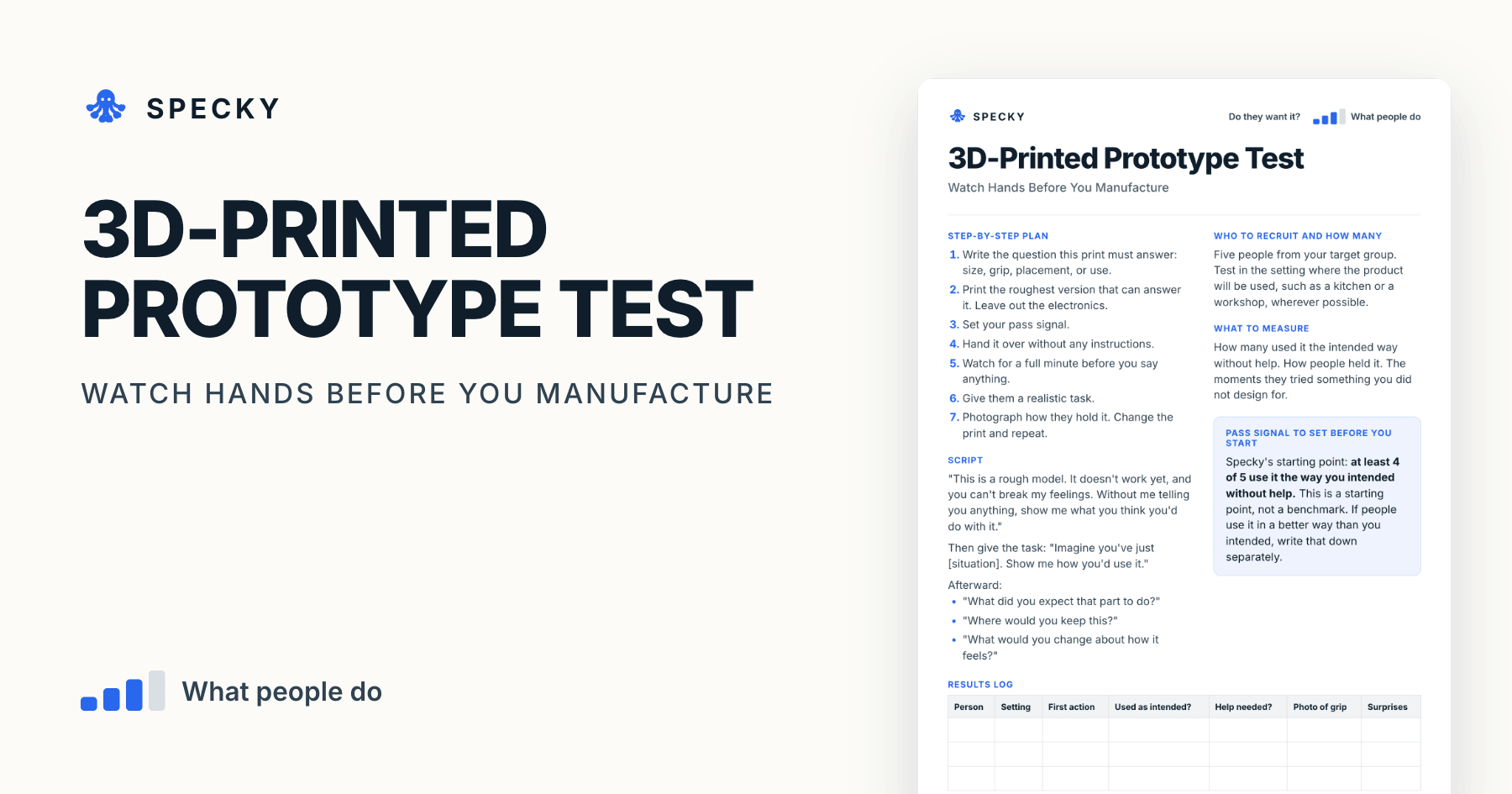
Before you pay for tooling, put a rough model in someone's hands and say nothing. Watch what they try to do.
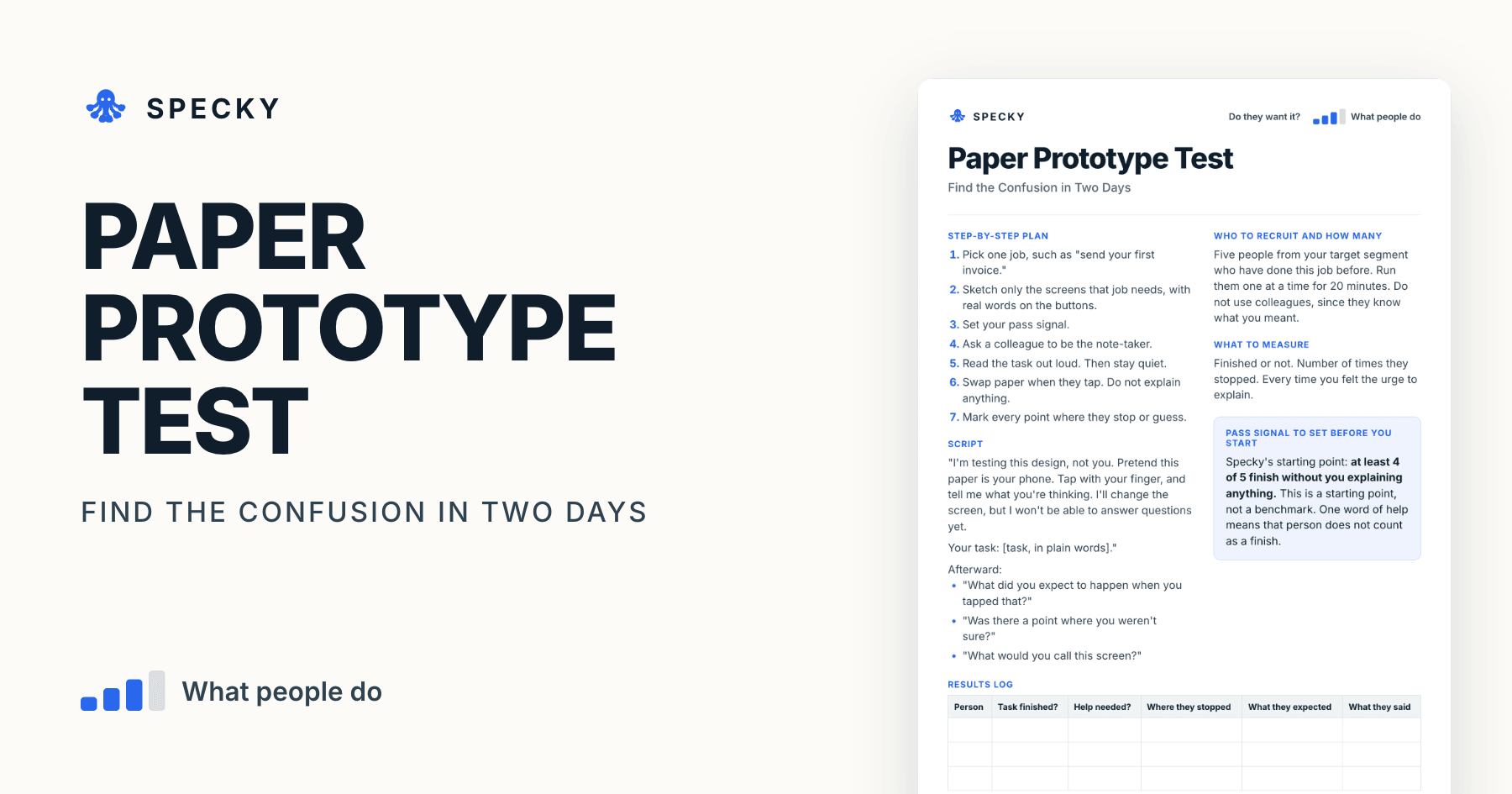
You need no designer and no code to find out your flow is confusing. You need paper, a pen, five people and the discipline to stay quiet.
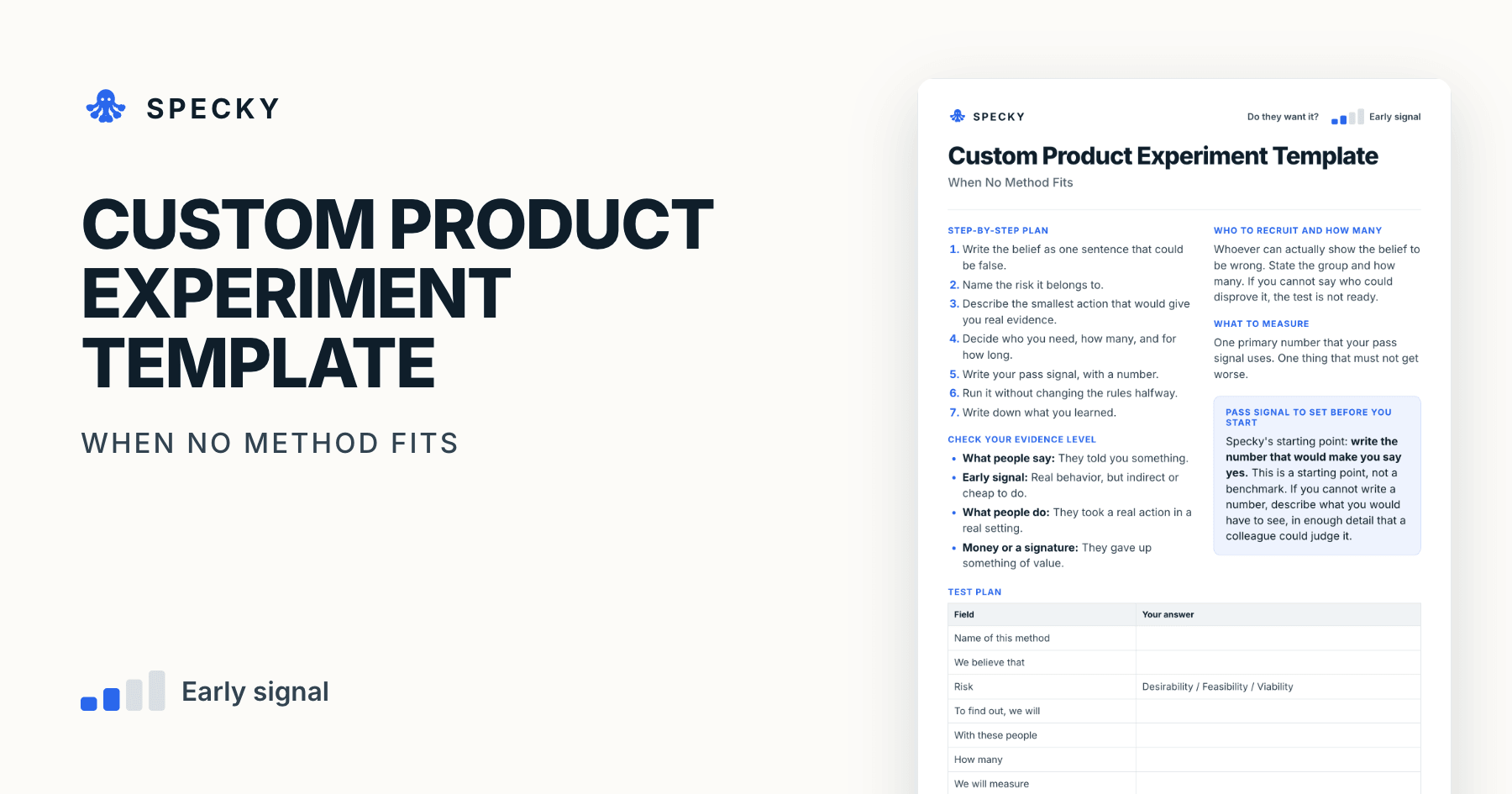
When no standard test fits your situation, design your own in seven steps, and make sure it is a test that can actually fail.
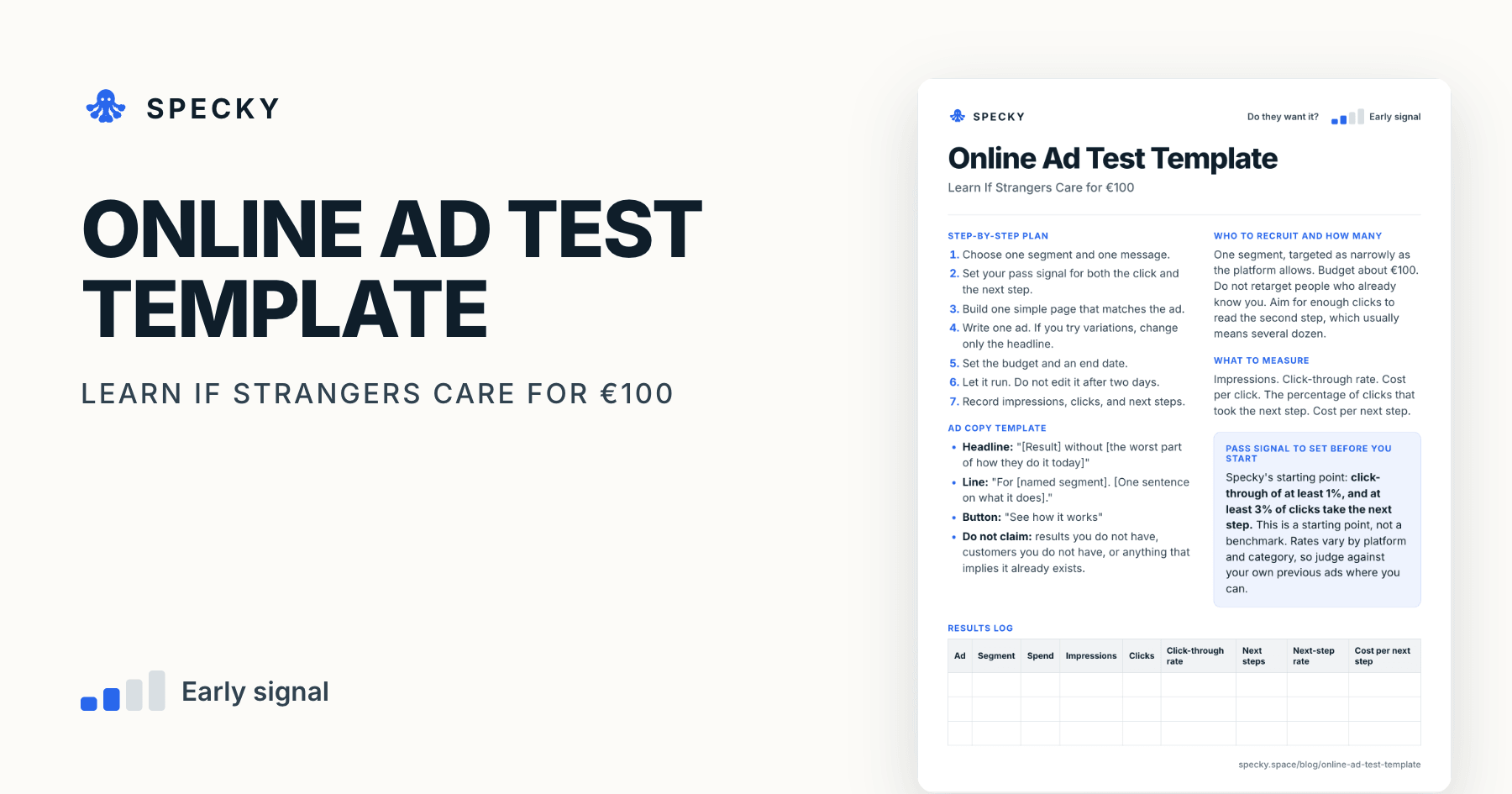
Friends go easy on you. Strangers do not. Find out what a cold audience does with your offer for about €100, and read the click and the next step separately.
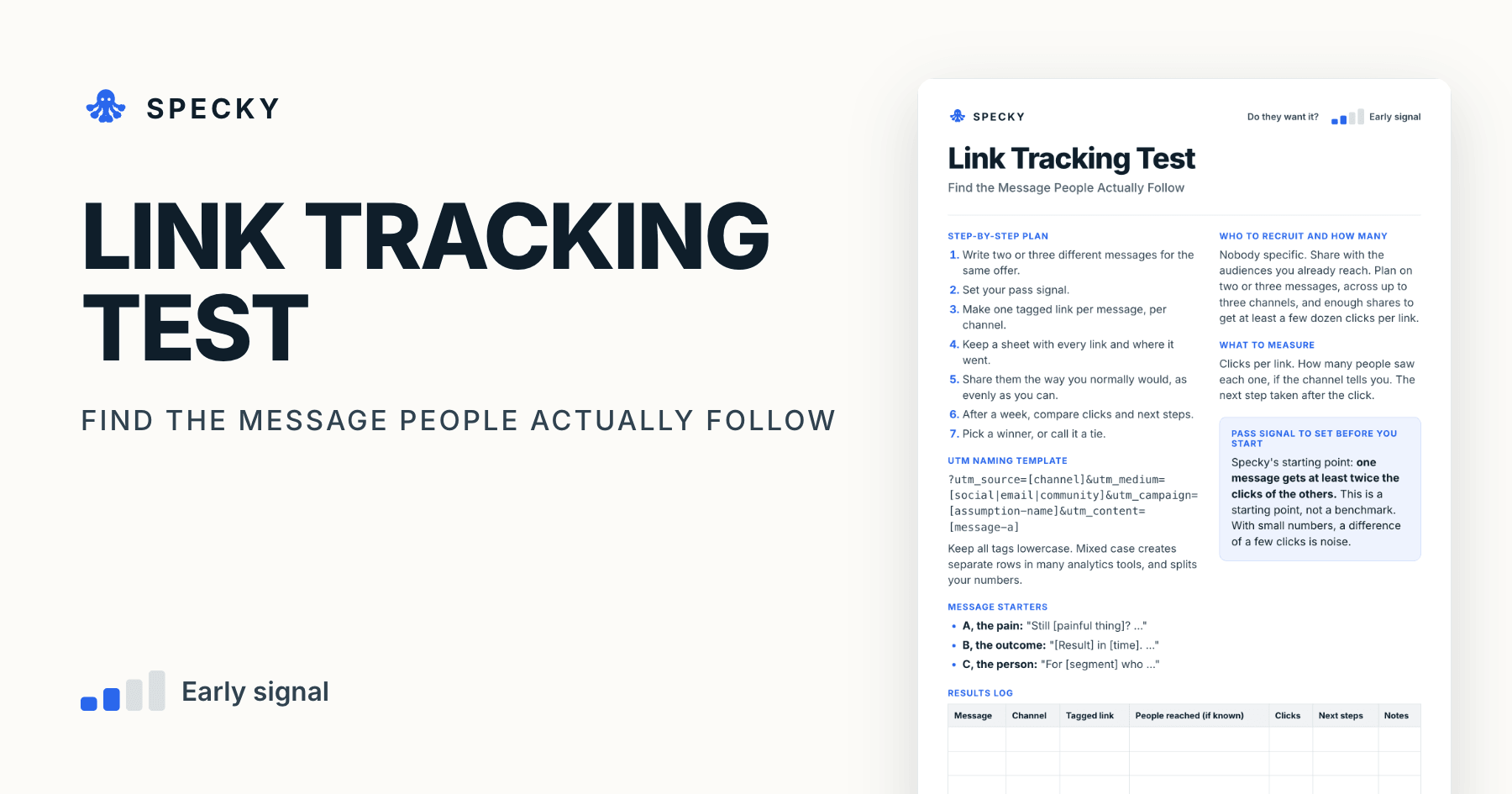
End the headline debate. Give every message its own tagged link, share them evenly for a week, and let what people actually click settle it.
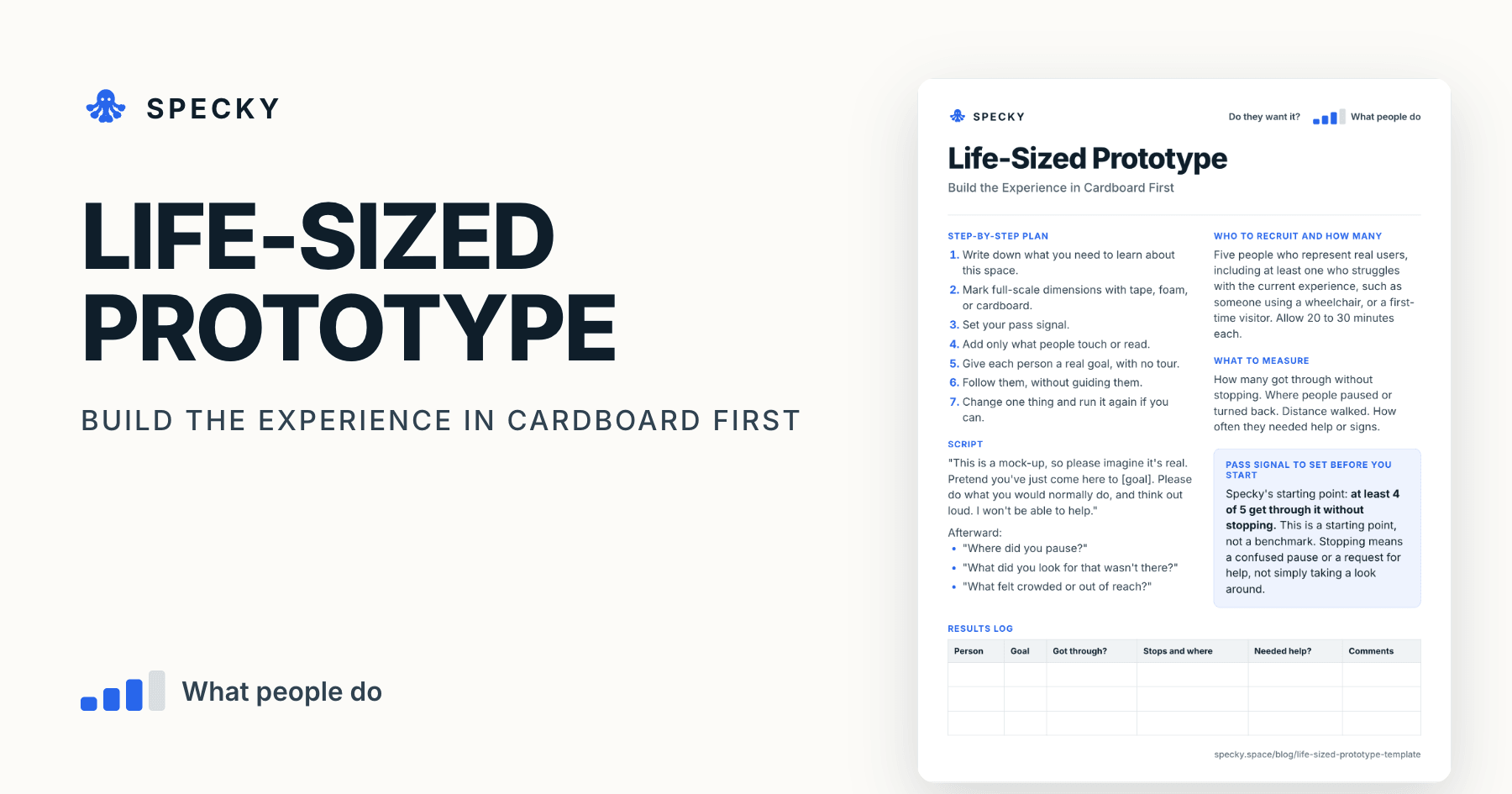
Some problems only show up when a real person stands in the space. Find them for the price of cardboard.
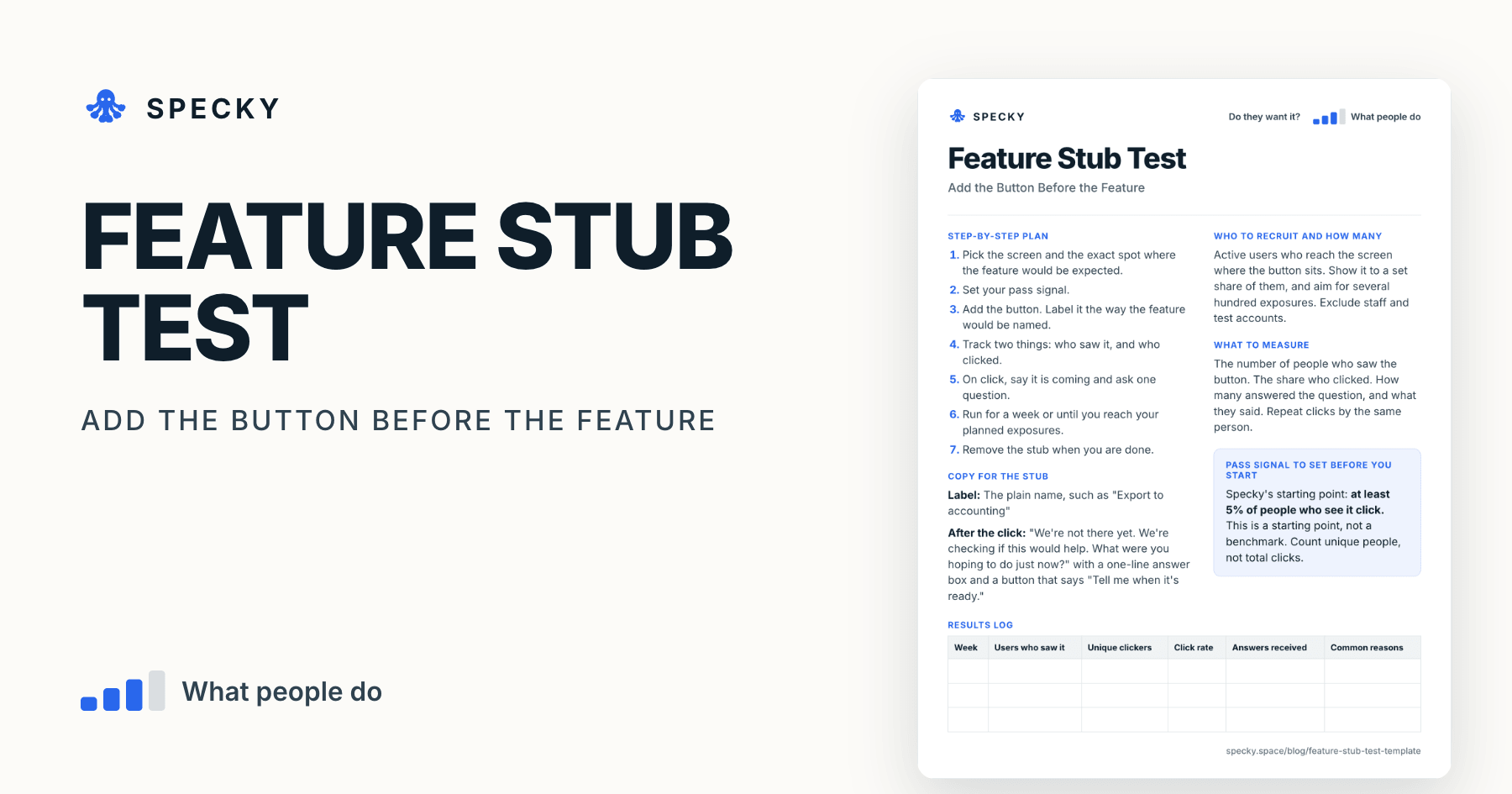
The best moment to learn if users want a feature is the moment they reach for it. Add the button first, and count who presses it.