AI product management
Understand the AI product manager role, choose practical tools, and keep customer evidence in the loop.
Practical guides for founders, first PMs, product engineers, and product builders: discover customer problems, decide what to build, and ship with AI.
Field guides for small teams building software, AI products, and better product habits.
Understand the AI product manager role, choose practical tools, and keep customer evidence in the loop.
Connect customer evidence, small-team workflows, and AI feature delivery from the first problem through a useful release.
Decide where AI fits, define quality and risk, and improve the feature after launch.
Practical workflows for people close to the code: learn from users, choose a small bet, and give coding agents useful context.
Turn customer signals into a focused plan, and test whether people value what your team is building.
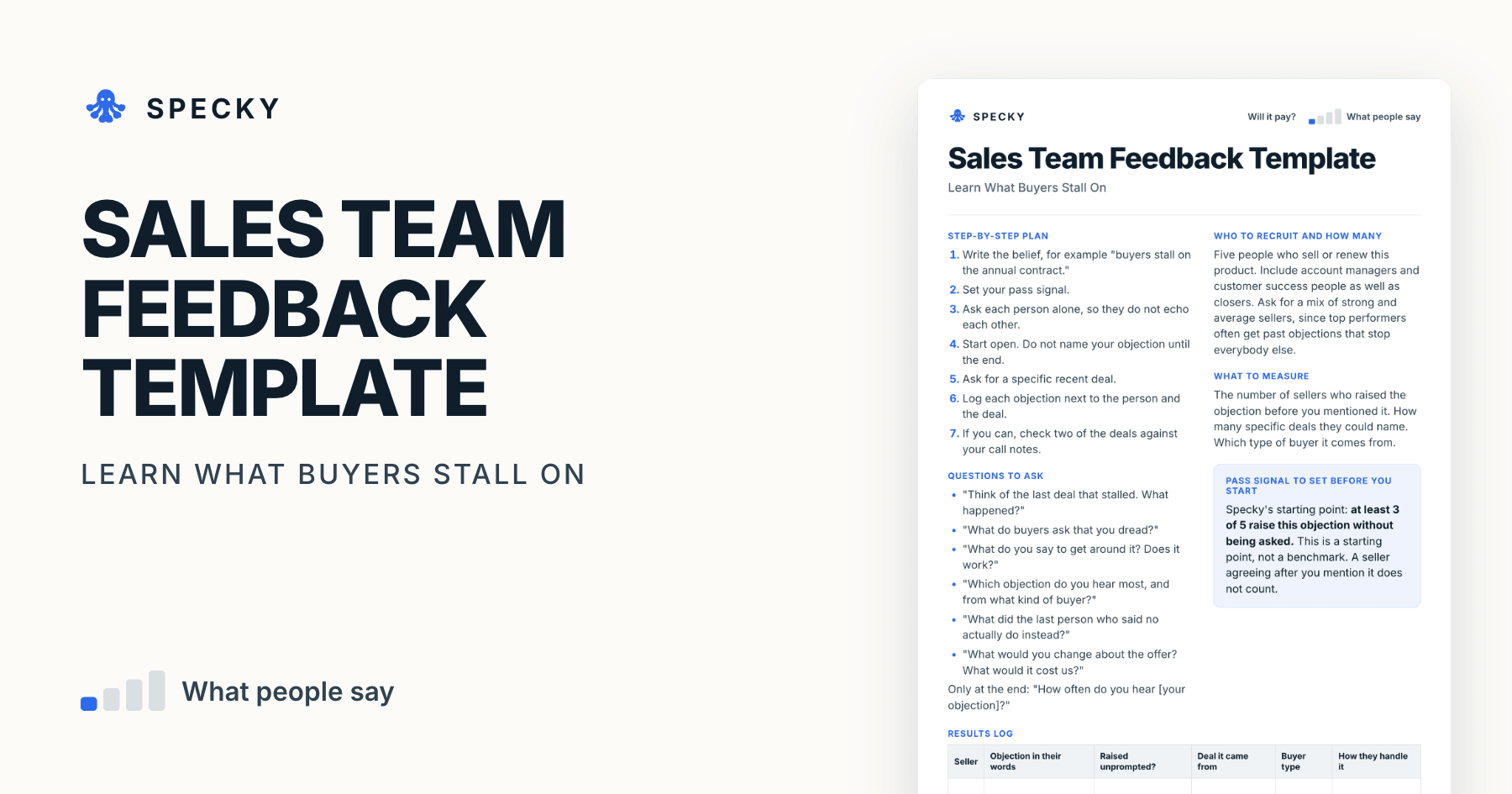
Someone at your company knows exactly why deals stall. Here is how to ask so that you get the truth and not agreement, and how to check what they remember.
Practical guides, product frameworks, and Specky updates — sent when it’s worth your time.
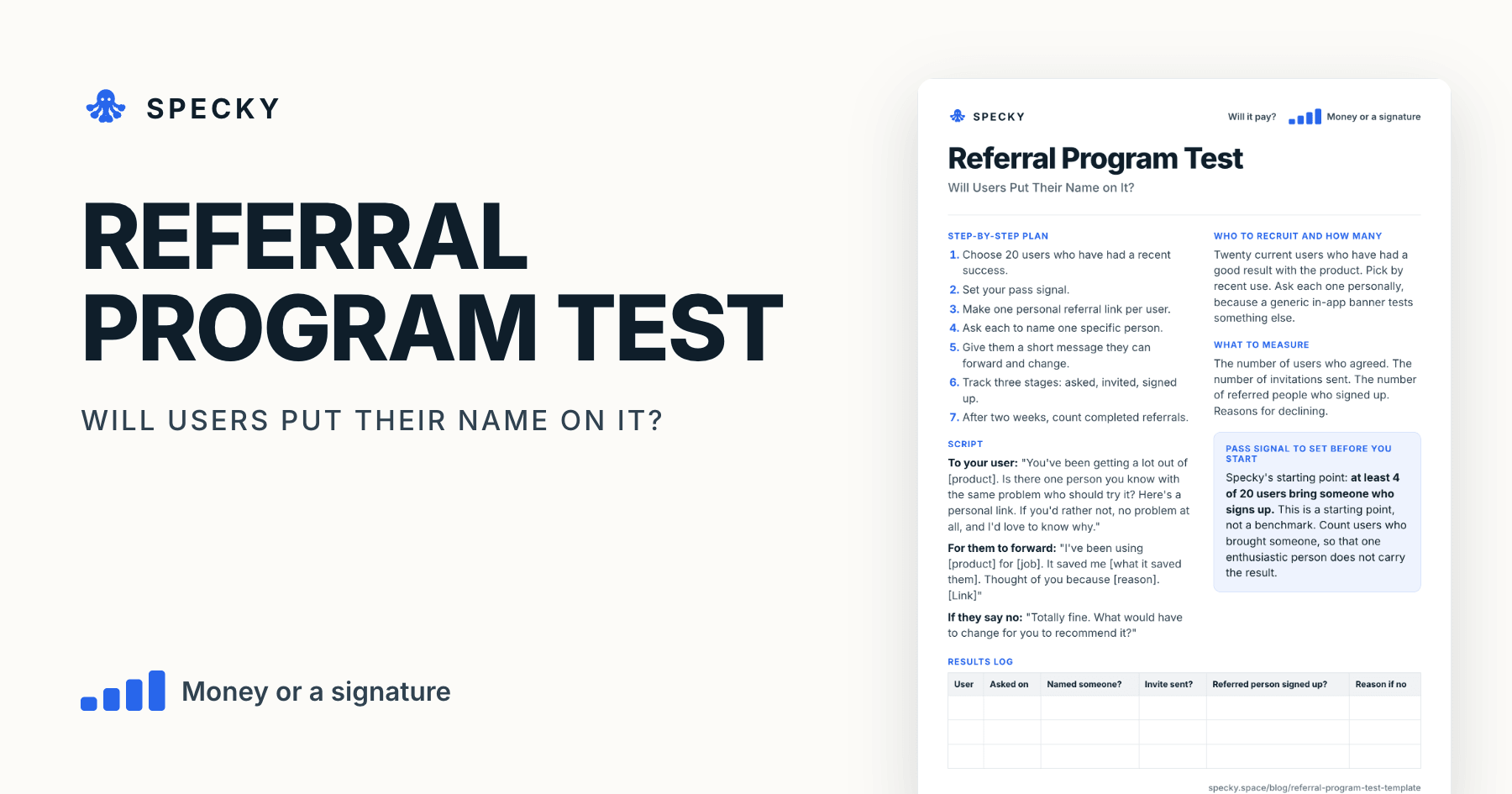
A referral means someone put their own name on your product. Find out if they will, without building any referral software or offering a reward.
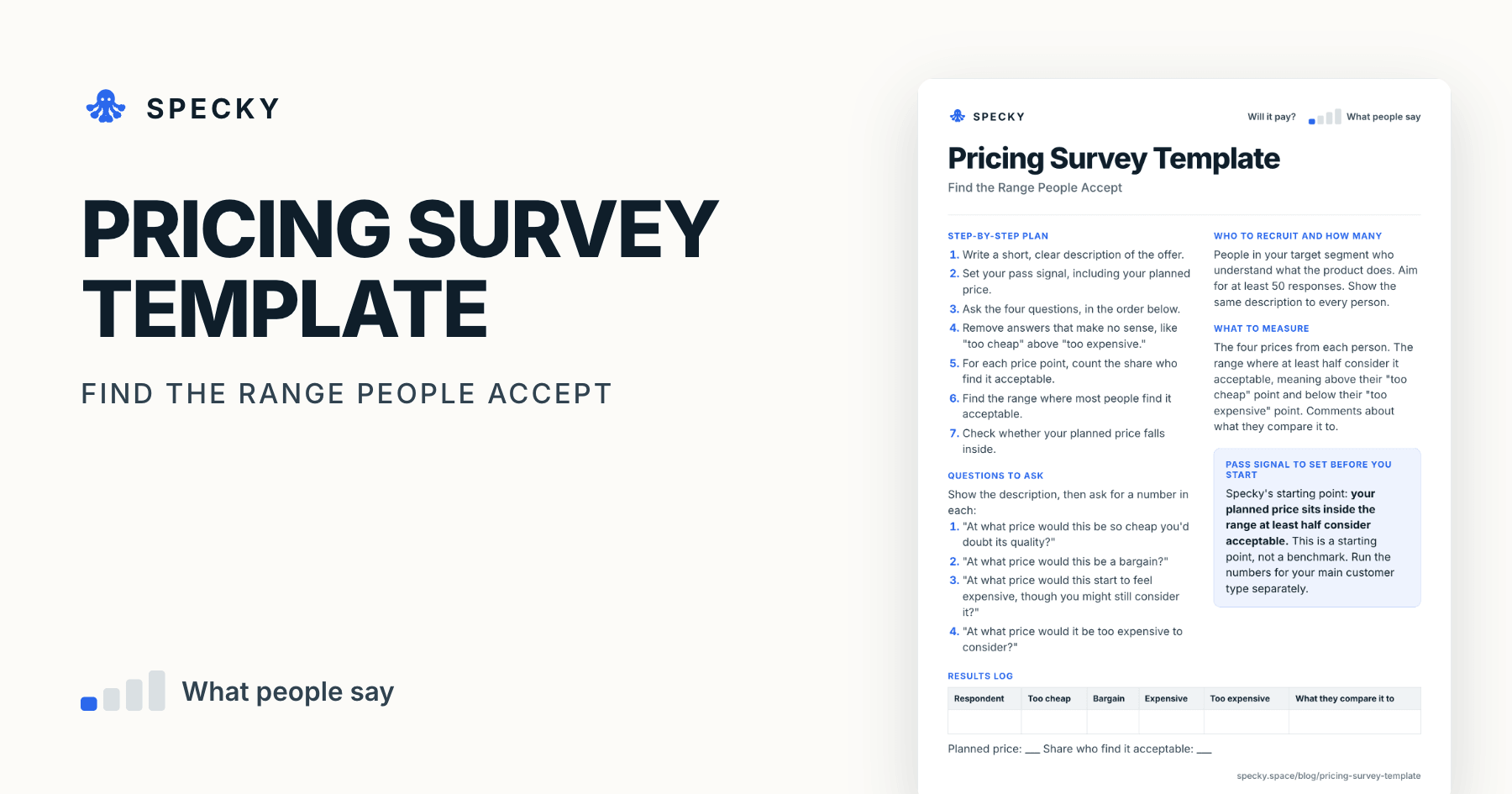
Stop guessing what to charge. Four questions give you a range of prices people accept, ready to test with a real offer. Here is how to ask them and how to read the answers.
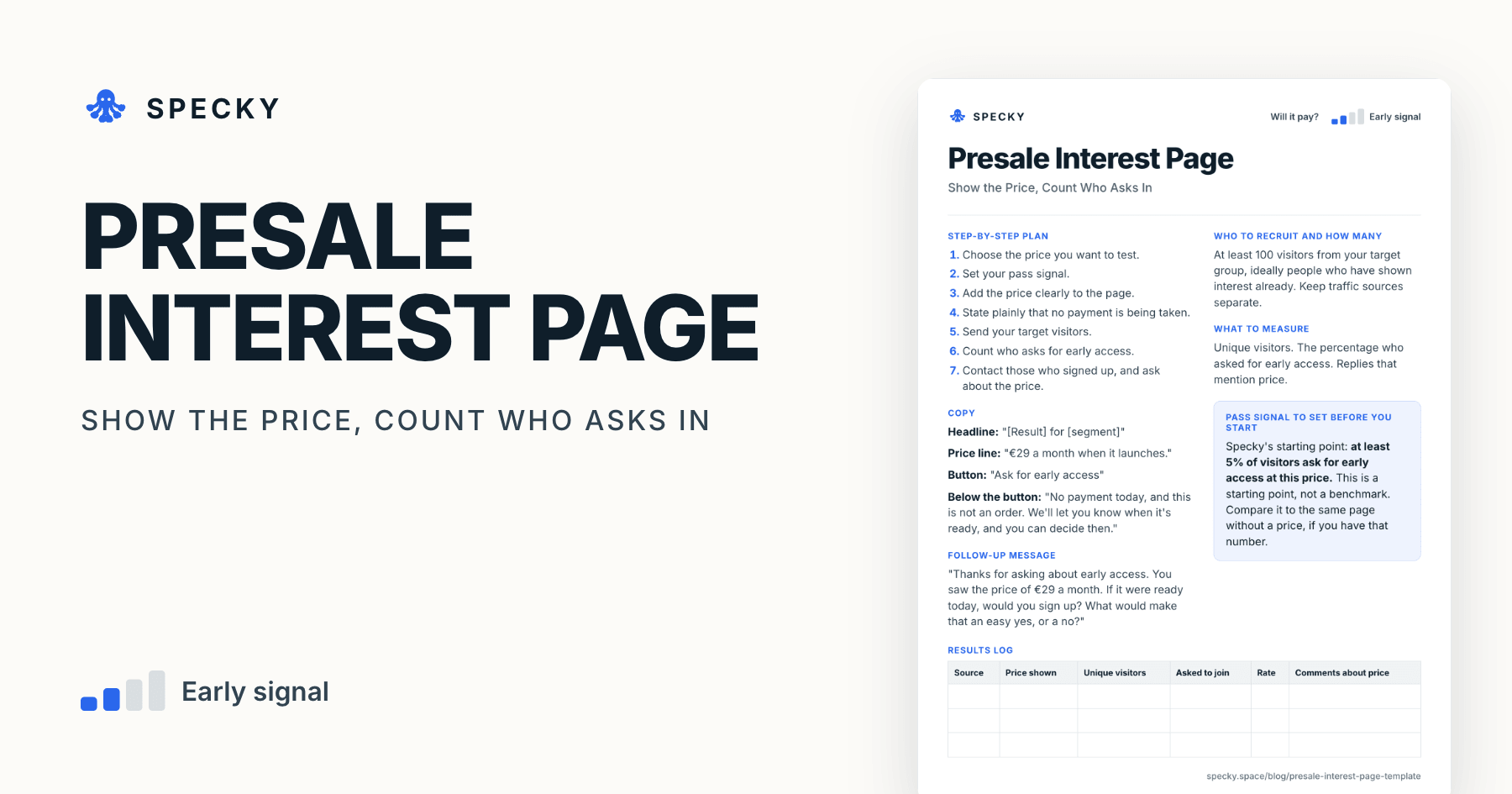
Interest is easy when the price is hidden. Put the number on the page, say plainly that no payment is taken, and count who still asks to join.
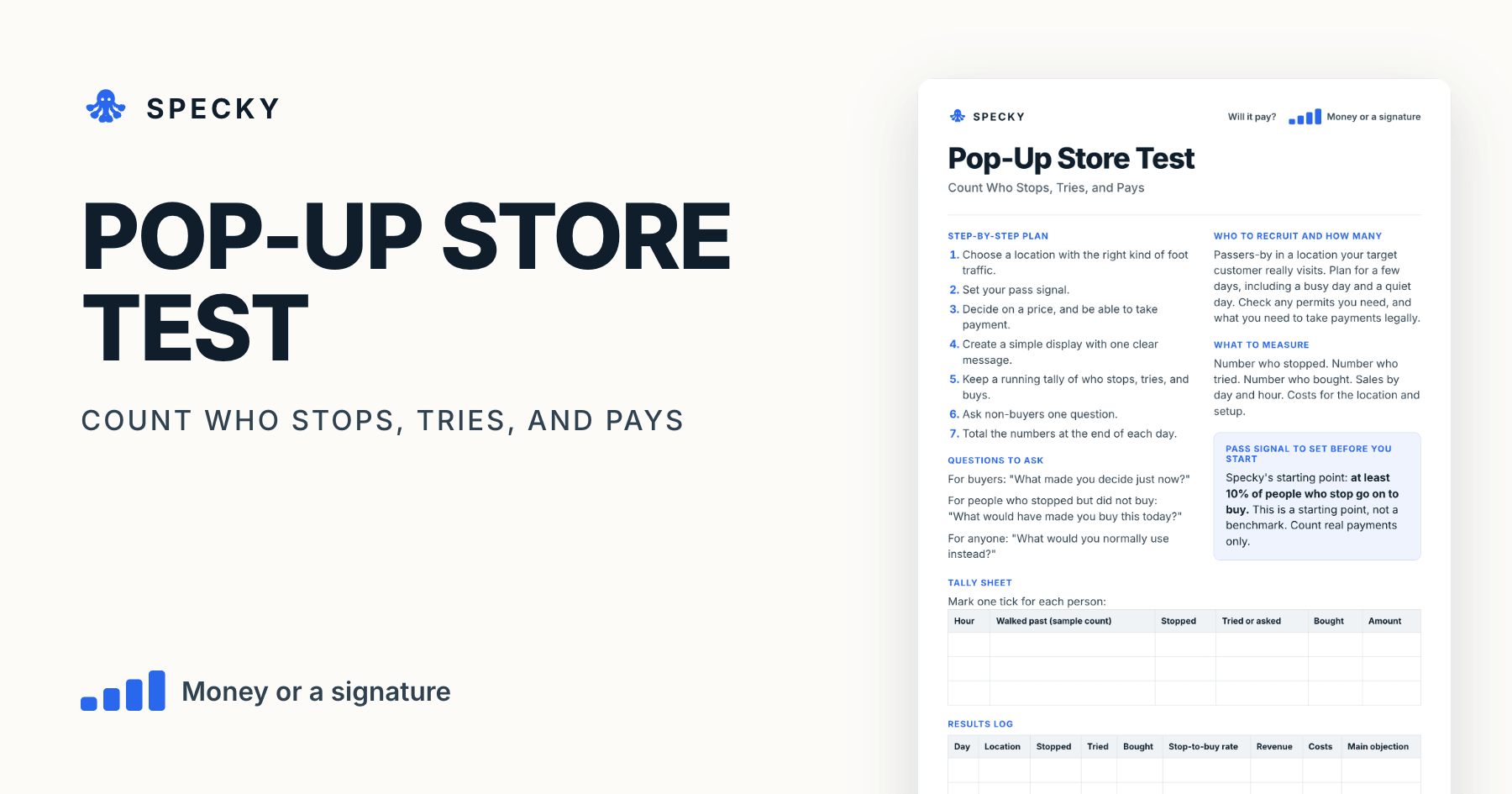
Nothing teaches you like watching a stranger decide whether to pay. Count who stops, who tries, and who buys.
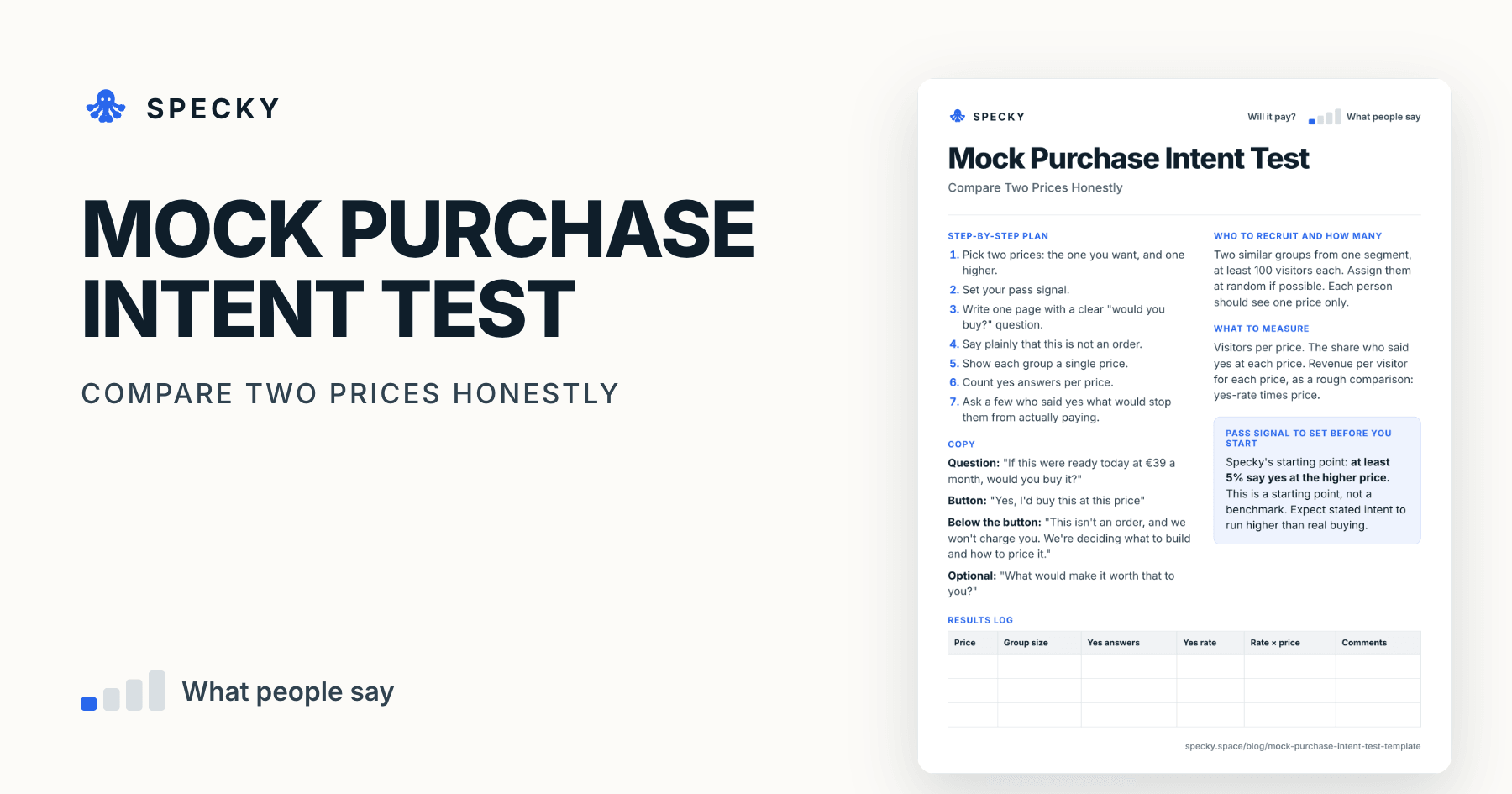
Compare two prices in about a week without selling anything, as long as you say plainly that no order is being placed and read every yes as a stated intent.
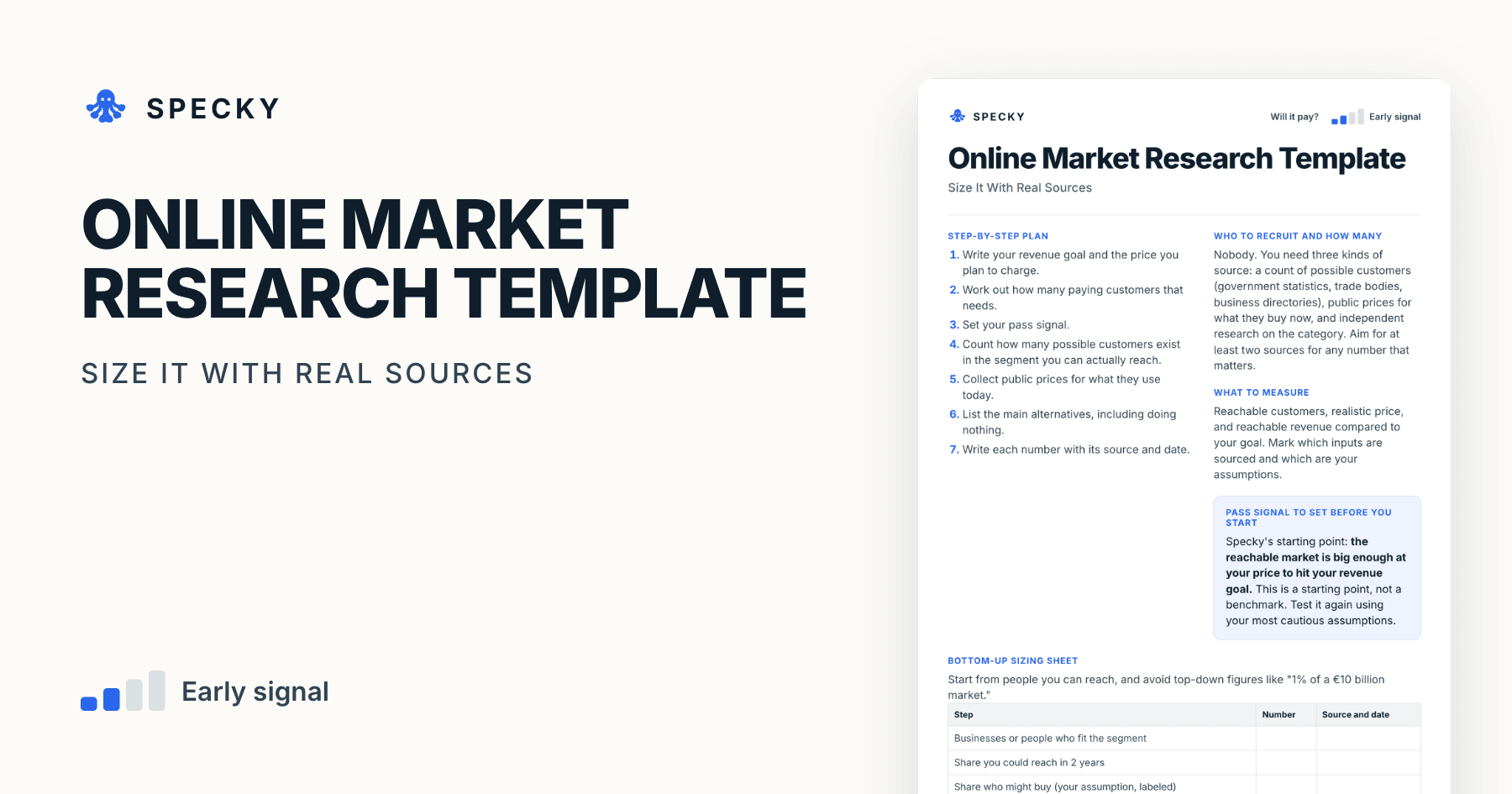
Skip the "we only need 1%" maths. Count the customers you can really reach, multiply by a price they already pay, and keep a source and date next to every number.
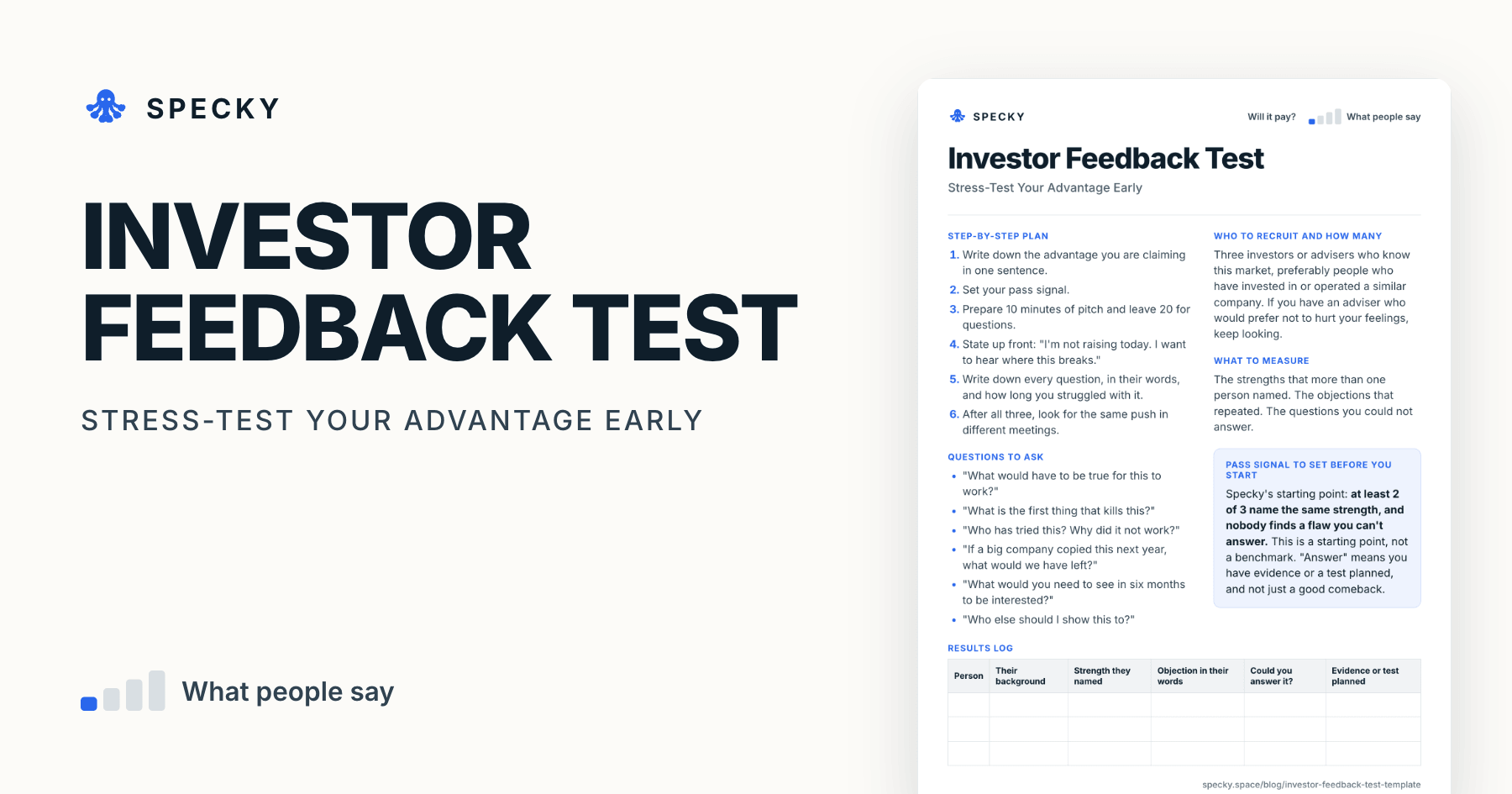
People who have watched companies fail can find your weak spot in ten minutes. Use that, and do not mistake it for demand.
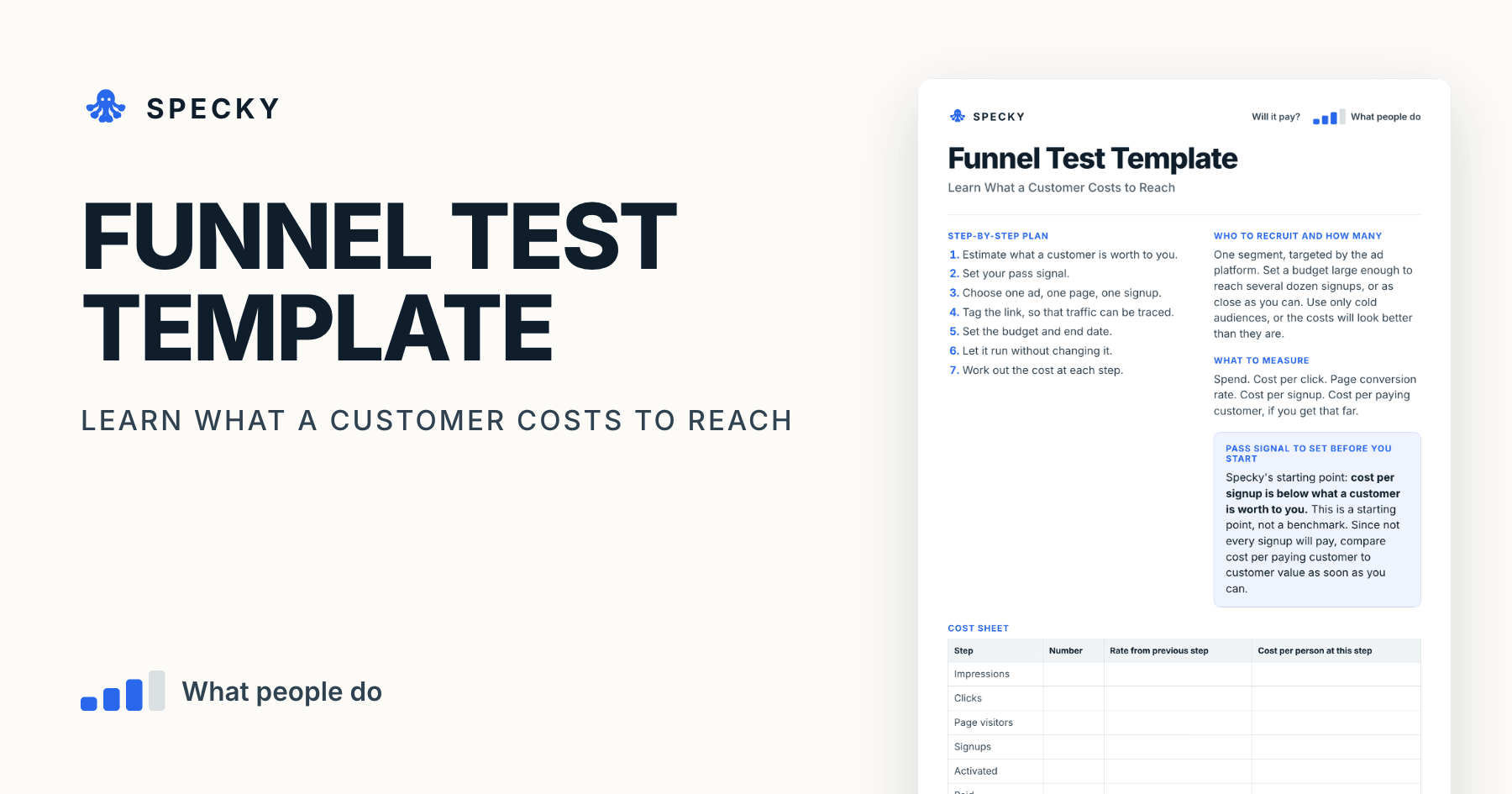
Plenty of products are loved by people who cost too much to reach. Find out what a customer really costs before you plan around it.