AI product management
Understand the AI product manager role, choose practical tools, and keep customer evidence in the loop.
Practical guides for founders, first PMs, product engineers, and product builders: discover customer problems, decide what to build, and ship with AI.
Field guides for small teams building software, AI products, and better product habits.
Understand the AI product manager role, choose practical tools, and keep customer evidence in the loop.
Connect customer evidence, small-team workflows, and AI feature delivery from the first problem through a useful release.
Decide where AI fits, define quality and risk, and improve the feature after launch.
Practical workflows for people close to the code: learn from users, choose a small bet, and give coding agents useful context.
Turn customer signals into a focused plan, and test whether people value what your team is building.
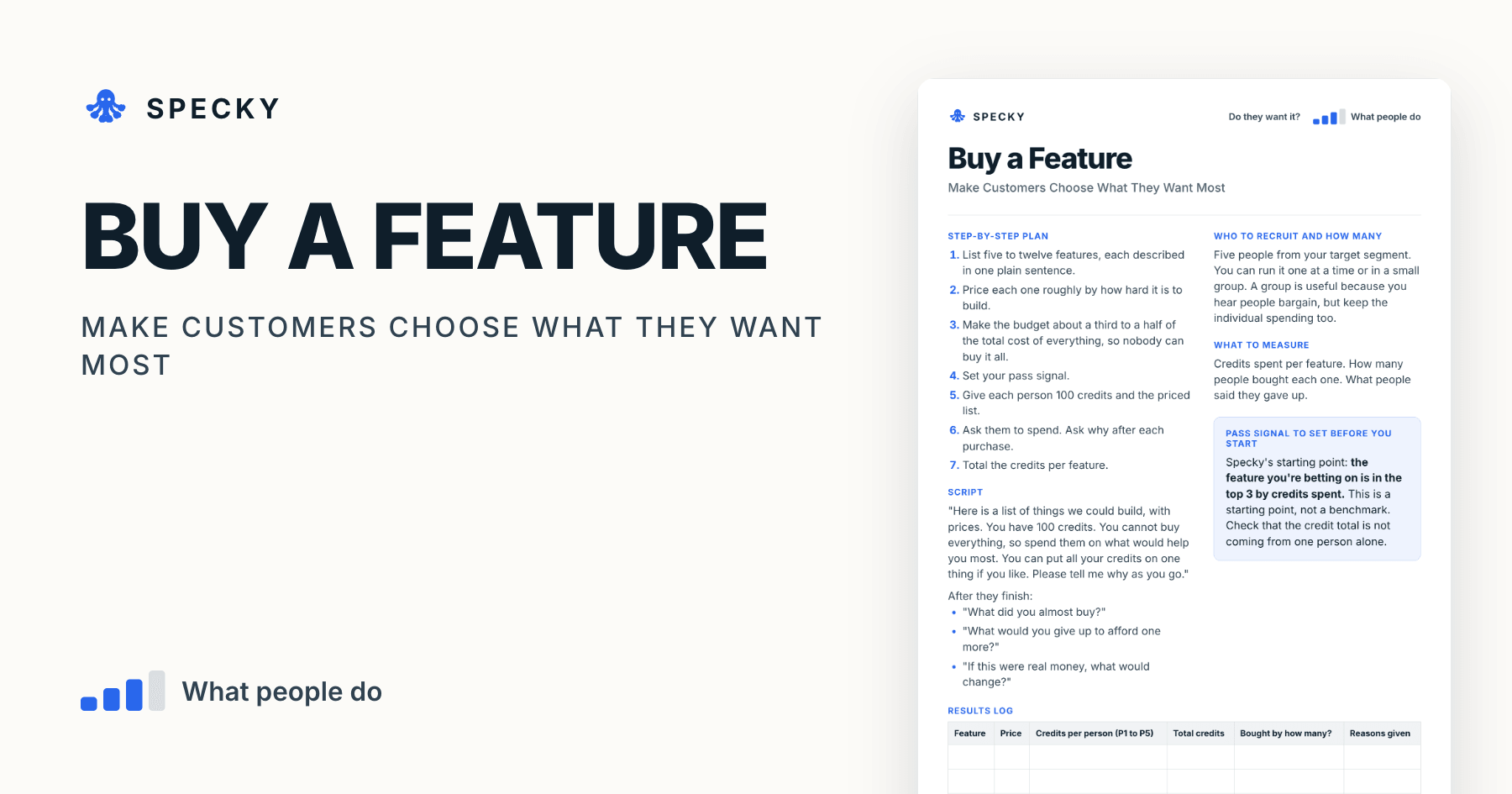
When customers say everything matters, hand them a budget. What they spend it on shows what they value most.
Practical guides, product frameworks, and Specky updates — sent when it’s worth your time.
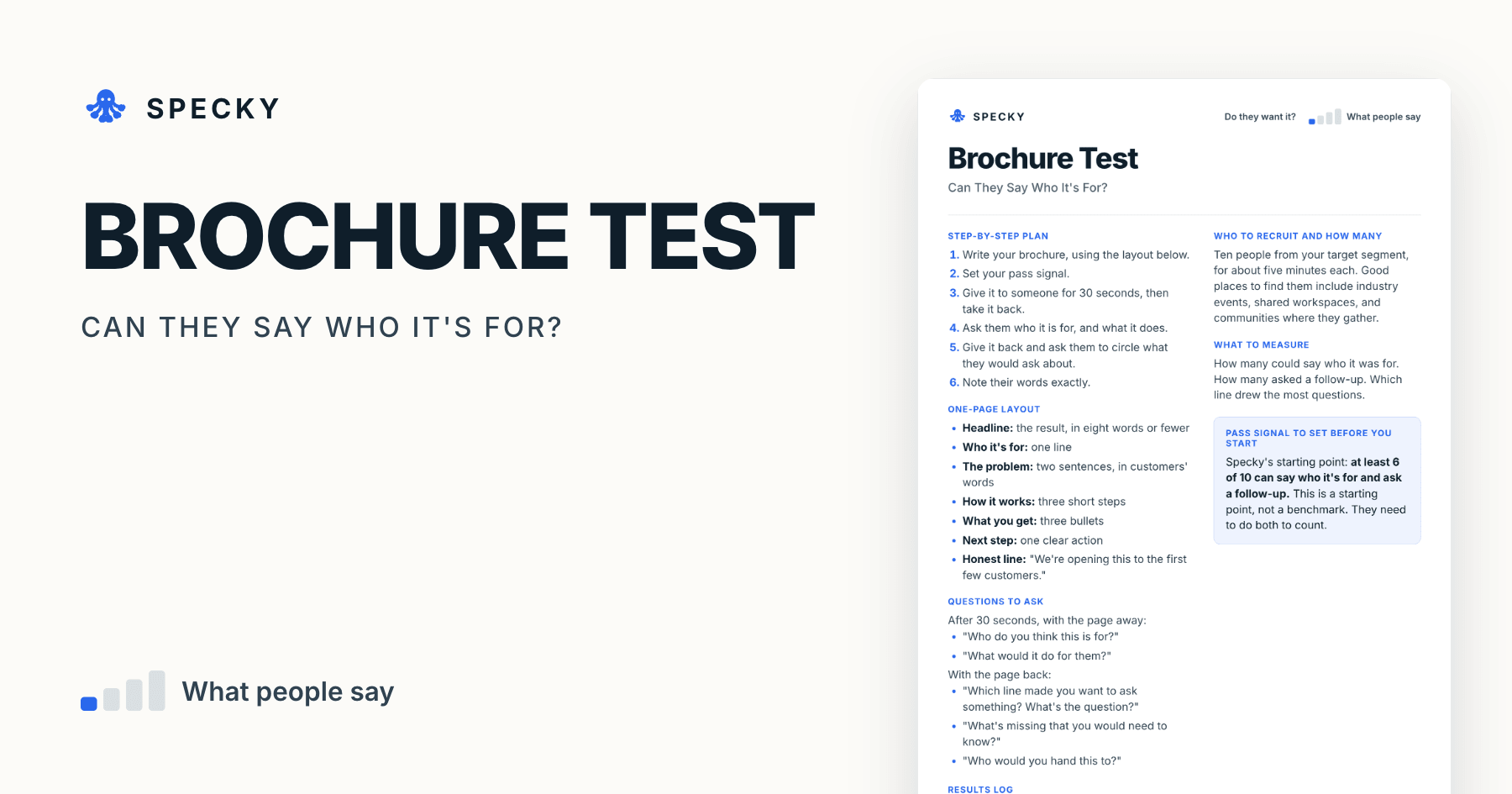
If people cannot repeat your offer after 30 seconds, it is not clear yet. A one-page, ten-person test that can change your pitch before you pay to promote it.
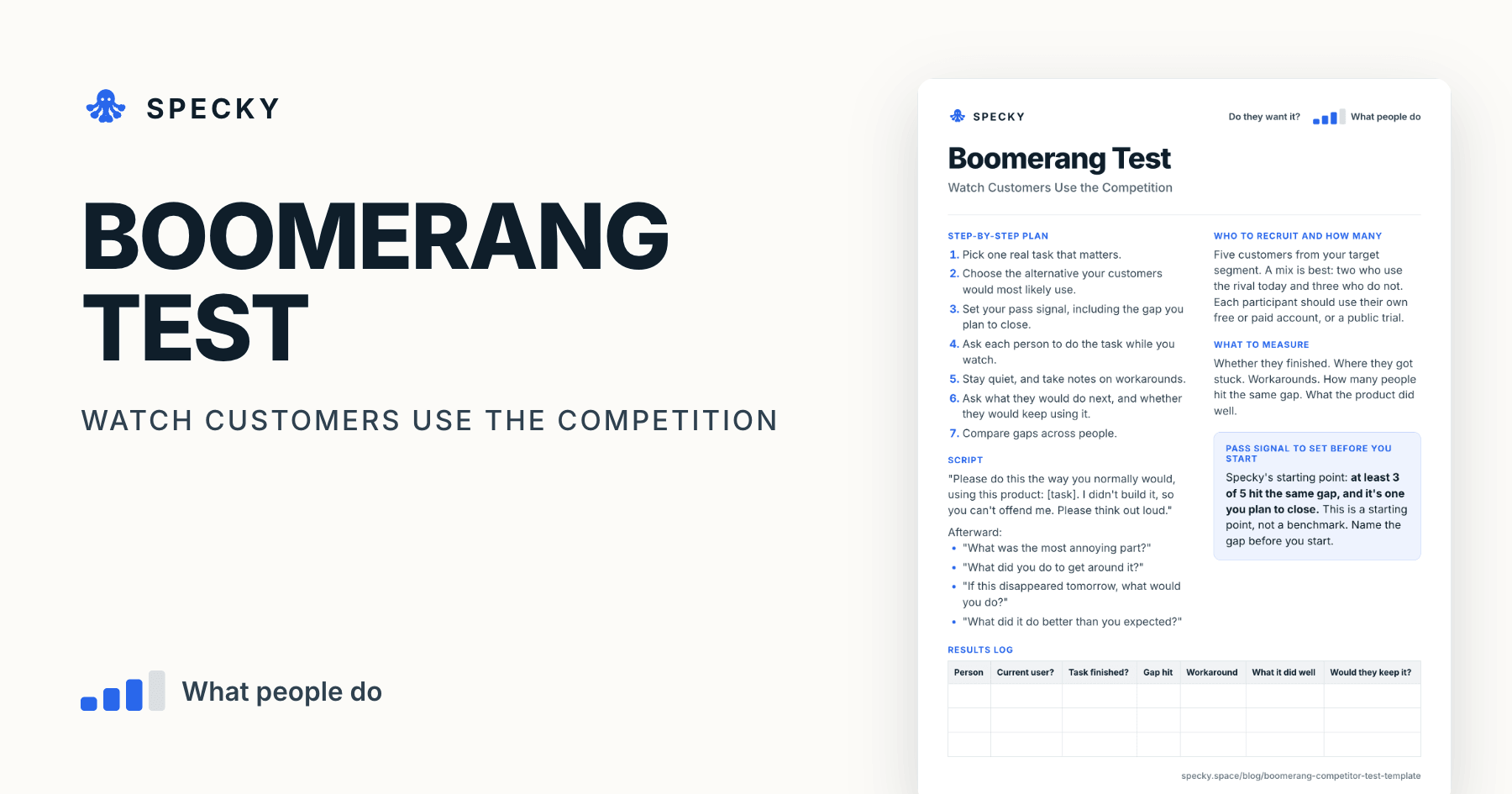
Someone has already built a working prototype of your idea: your competitor. Watch customers use it, and see what you have to beat.
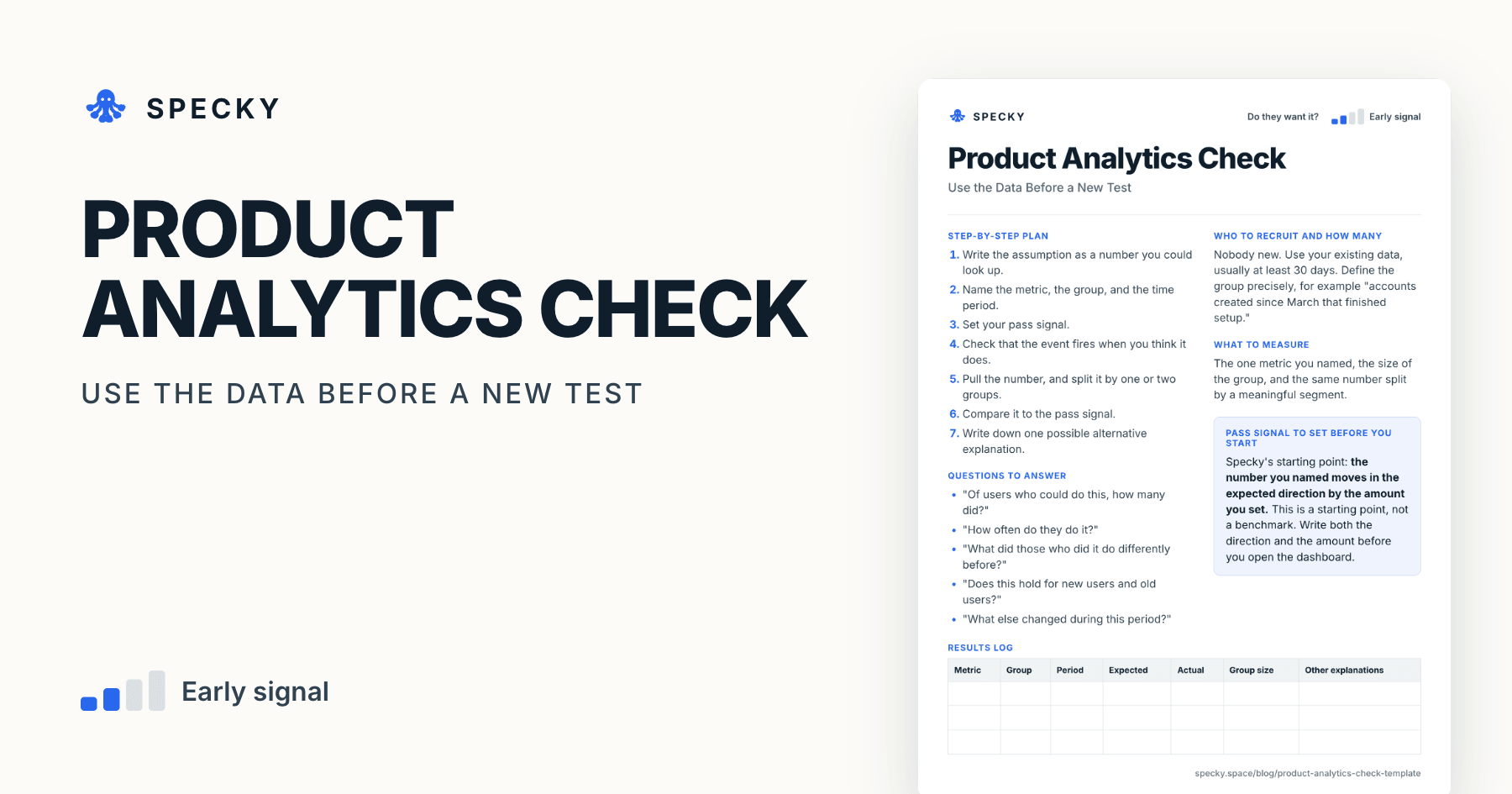
You might already have the answer. Check the data you collect before you plan a new test, and decide what counts before you look.
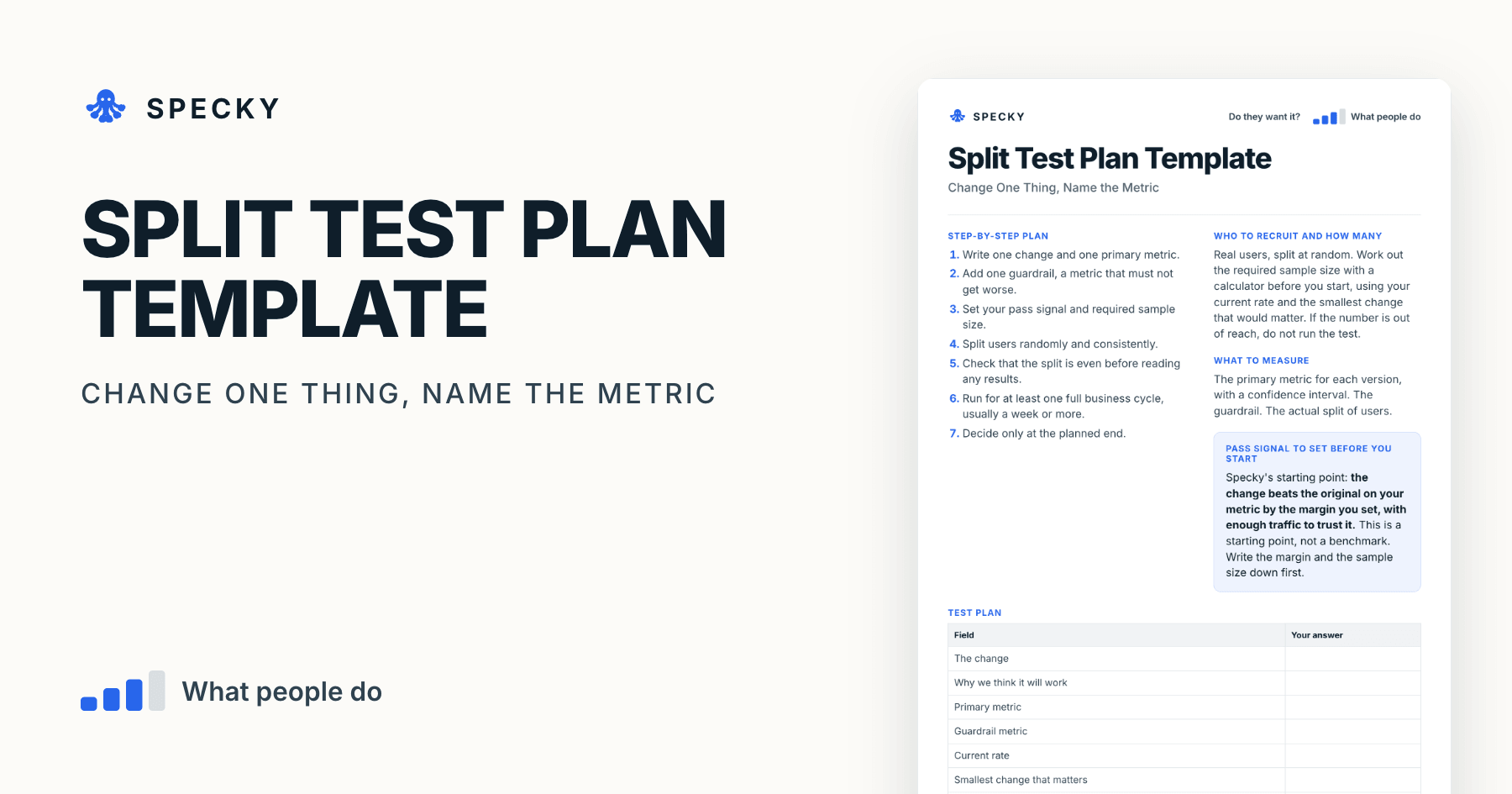
Most split tests go wrong before they start. Change one thing, name the metric first, work out the sample size, and do not peek.
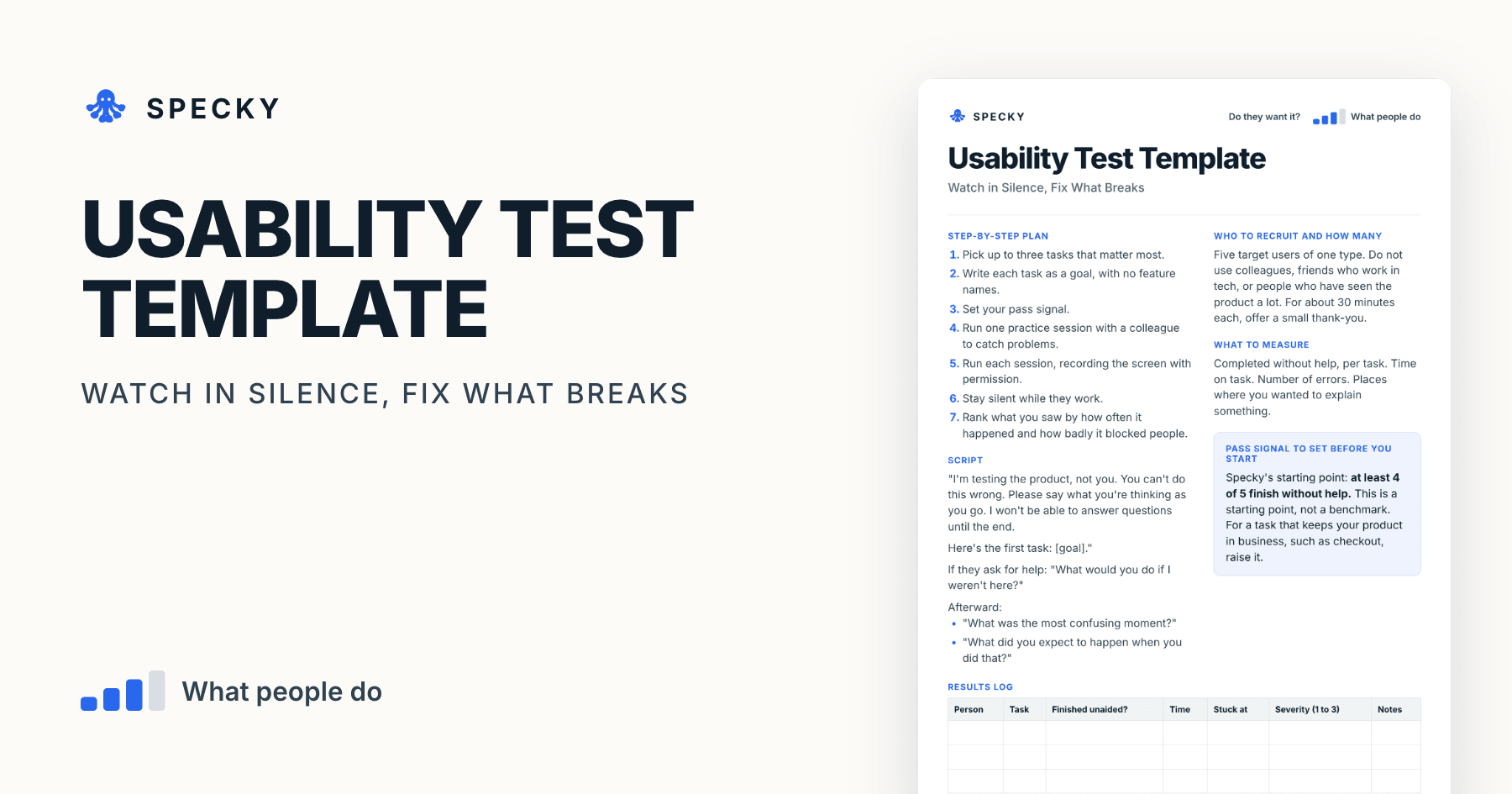
Every time you want to explain your product, you have found a bug. Five people, up to three tasks, and you say nothing until the end.
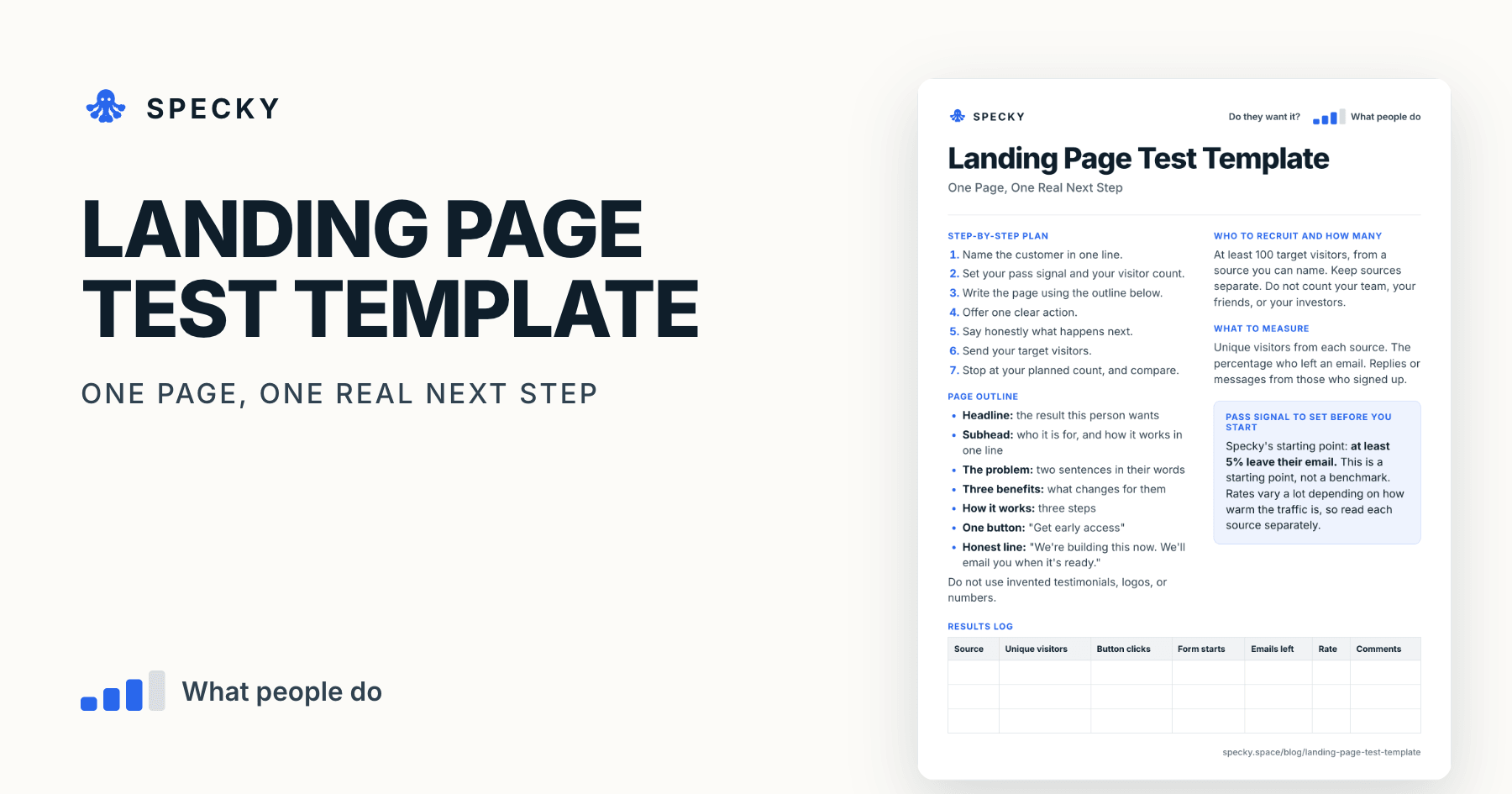
One page can tell you whether strangers want what you plan to build. Here is what to put on it, how many visitors you need and how to read the result.
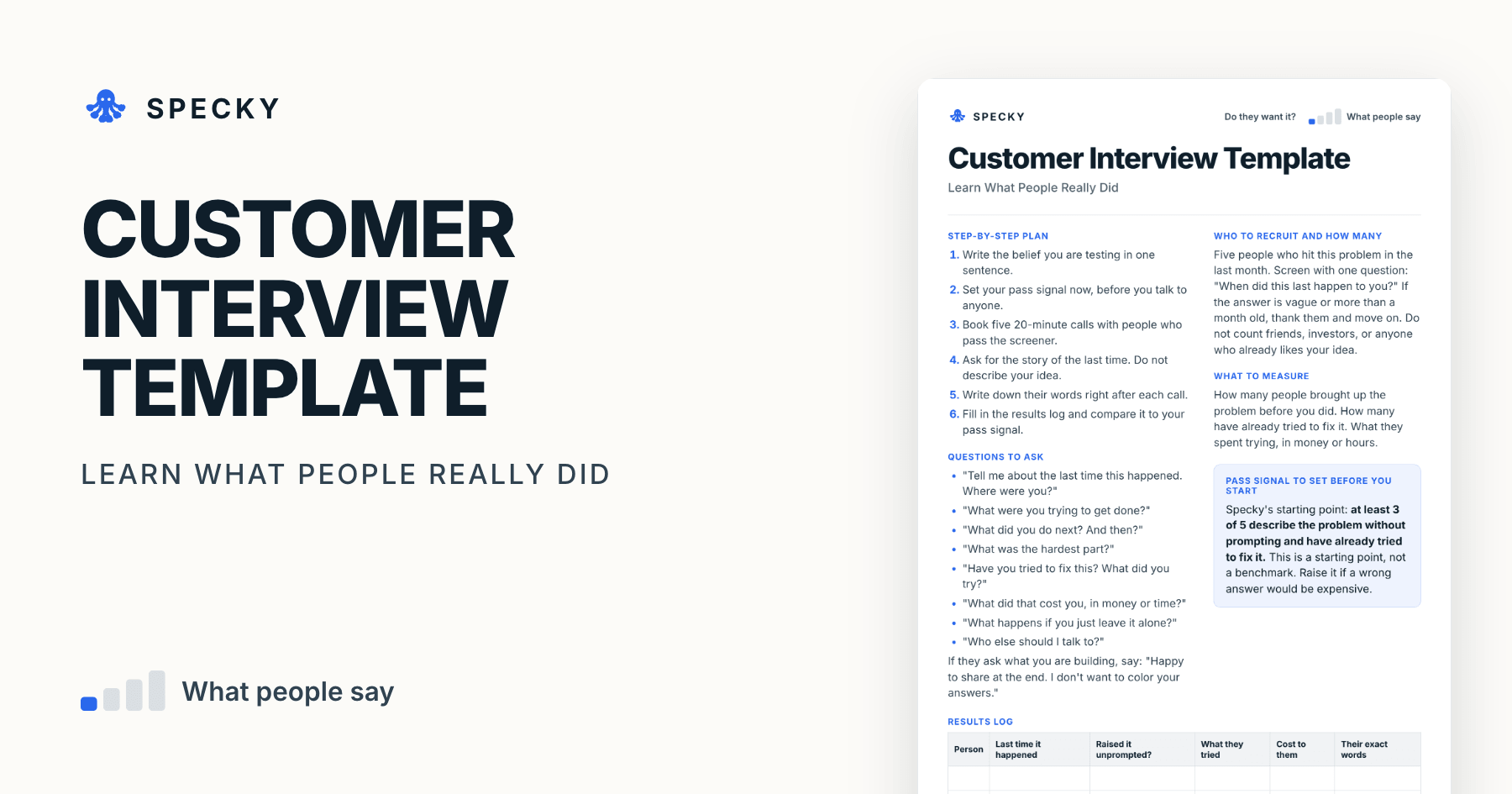
Stop collecting compliments. Copy a script that asks what people actually did the last time the problem hit, a question bank grouped by goal, and a pass signal you set before the first call.
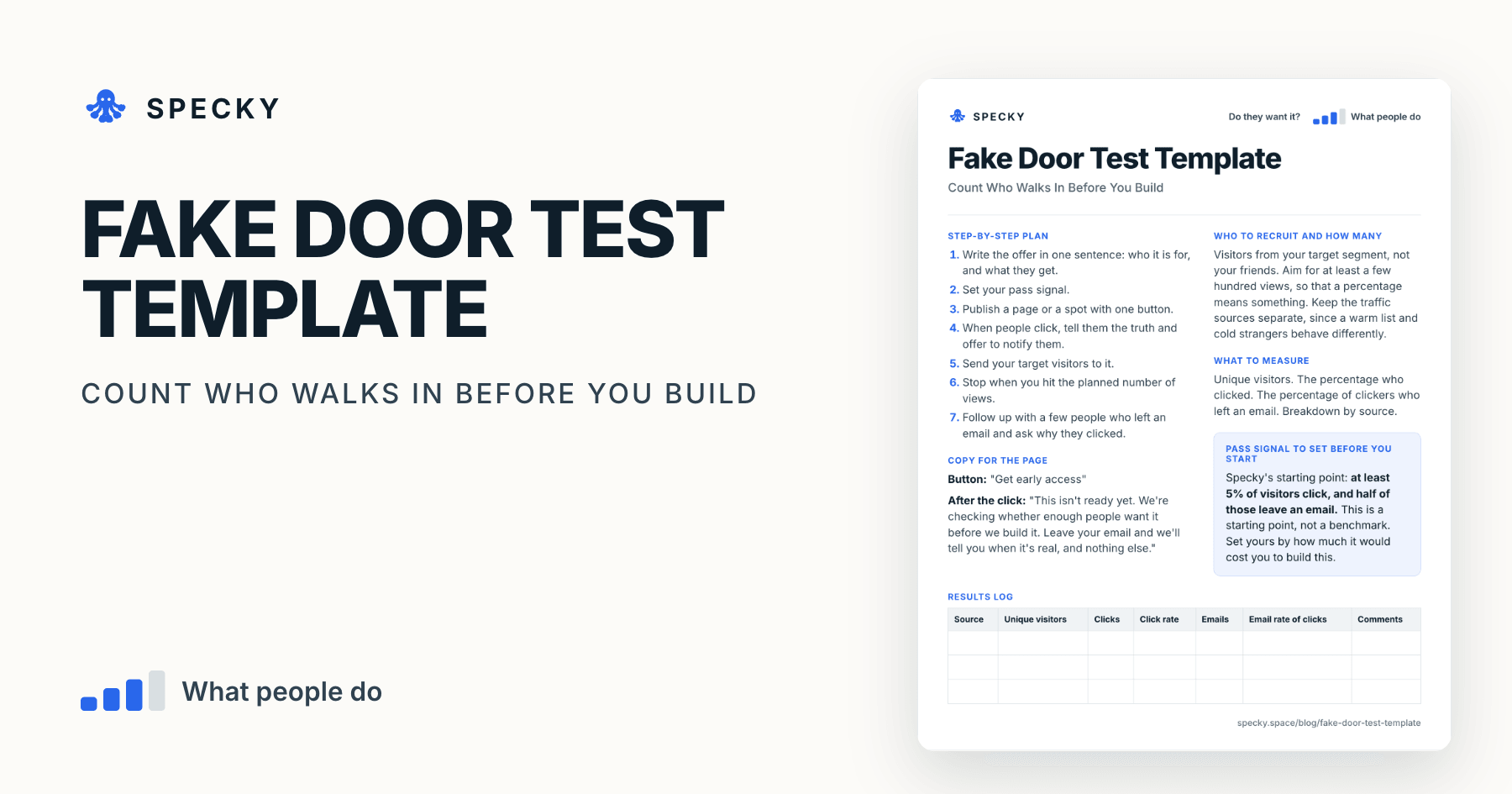
The most expensive way to learn nobody wants something is to build it. Offer it first, honestly, and count who tries to walk in.