AI product management
Understand the AI product manager role, choose practical tools, and keep customer evidence in the loop.
Practical guides for founders, first PMs, product engineers, and product builders: discover customer problems, decide what to build, and ship with AI.
Field guides for small teams building software, AI products, and better product habits.
Understand the AI product manager role, choose practical tools, and keep customer evidence in the loop.
Connect customer evidence, small-team workflows, and AI feature delivery from the first problem through a useful release.
Decide where AI fits, define quality and risk, and improve the feature after launch.
Practical workflows for people close to the code: learn from users, choose a small bet, and give coding agents useful context.
Turn customer signals into a focused plan, and test whether people value what your team is building.
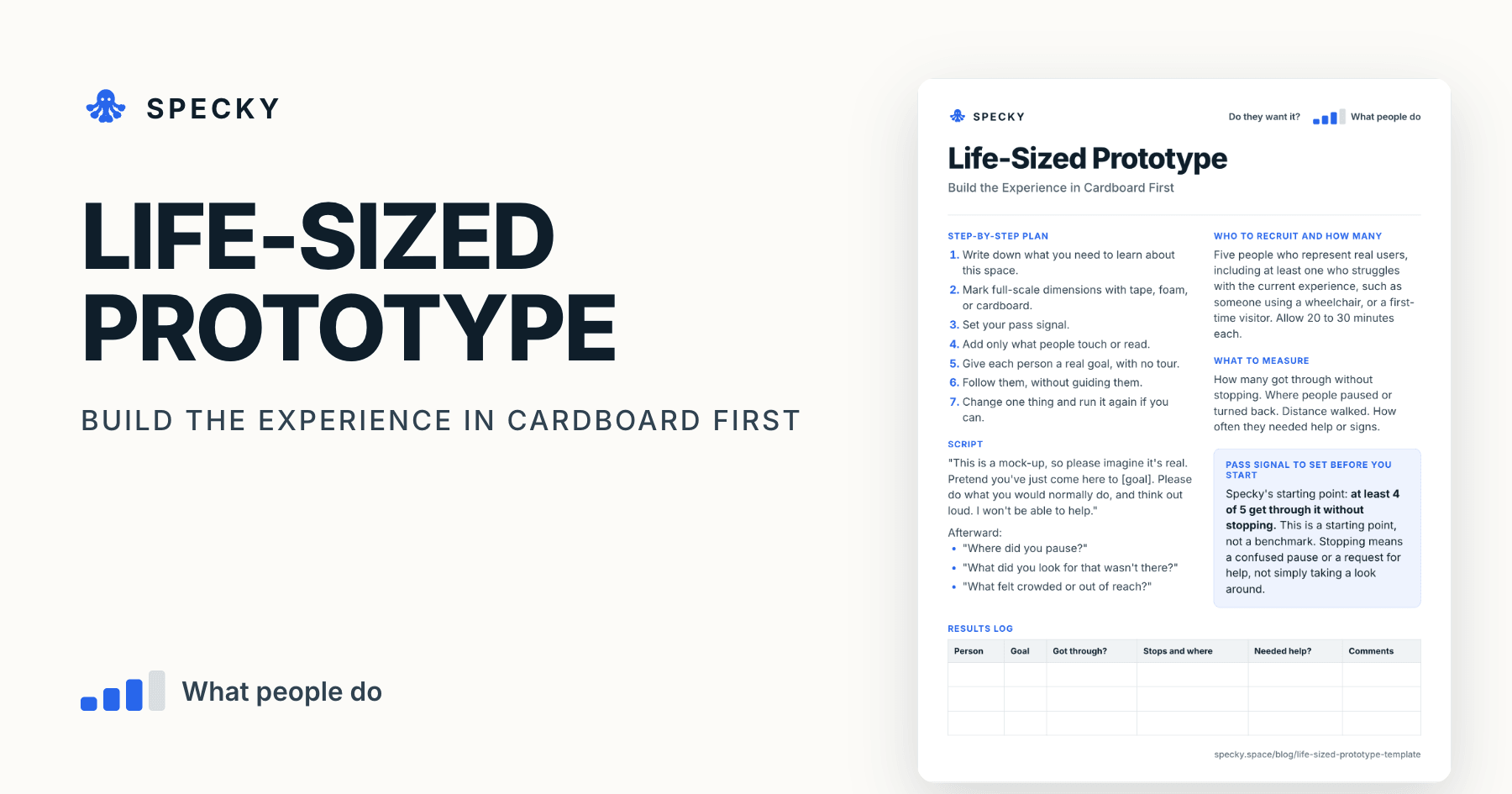
Some problems only show up when a real person stands in the space. Find them for the price of cardboard.
Practical guides, product frameworks, and Specky updates — sent when it’s worth your time.
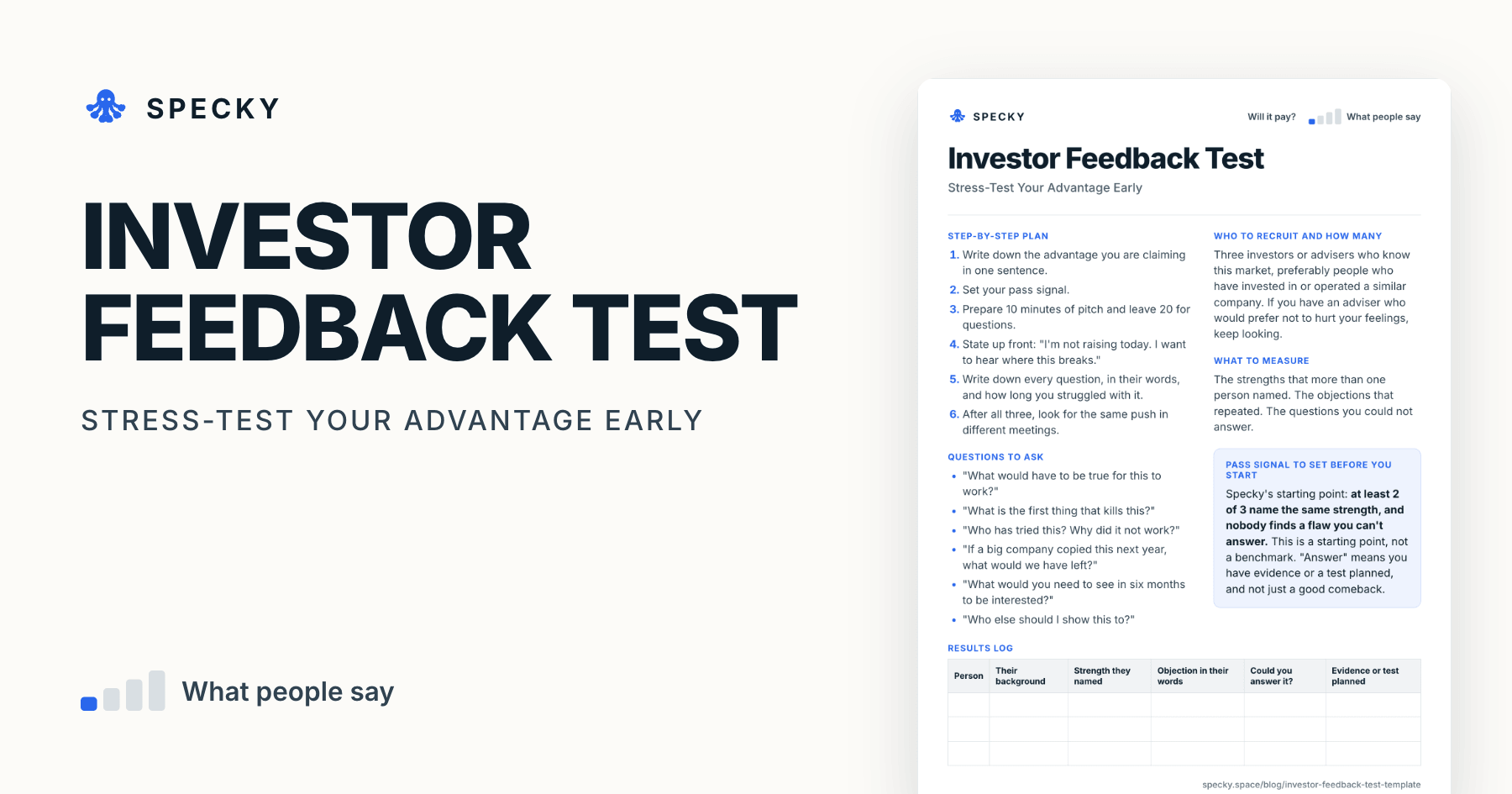
People who have watched companies fail can find your weak spot in ten minutes. Use that, and do not mistake it for demand.
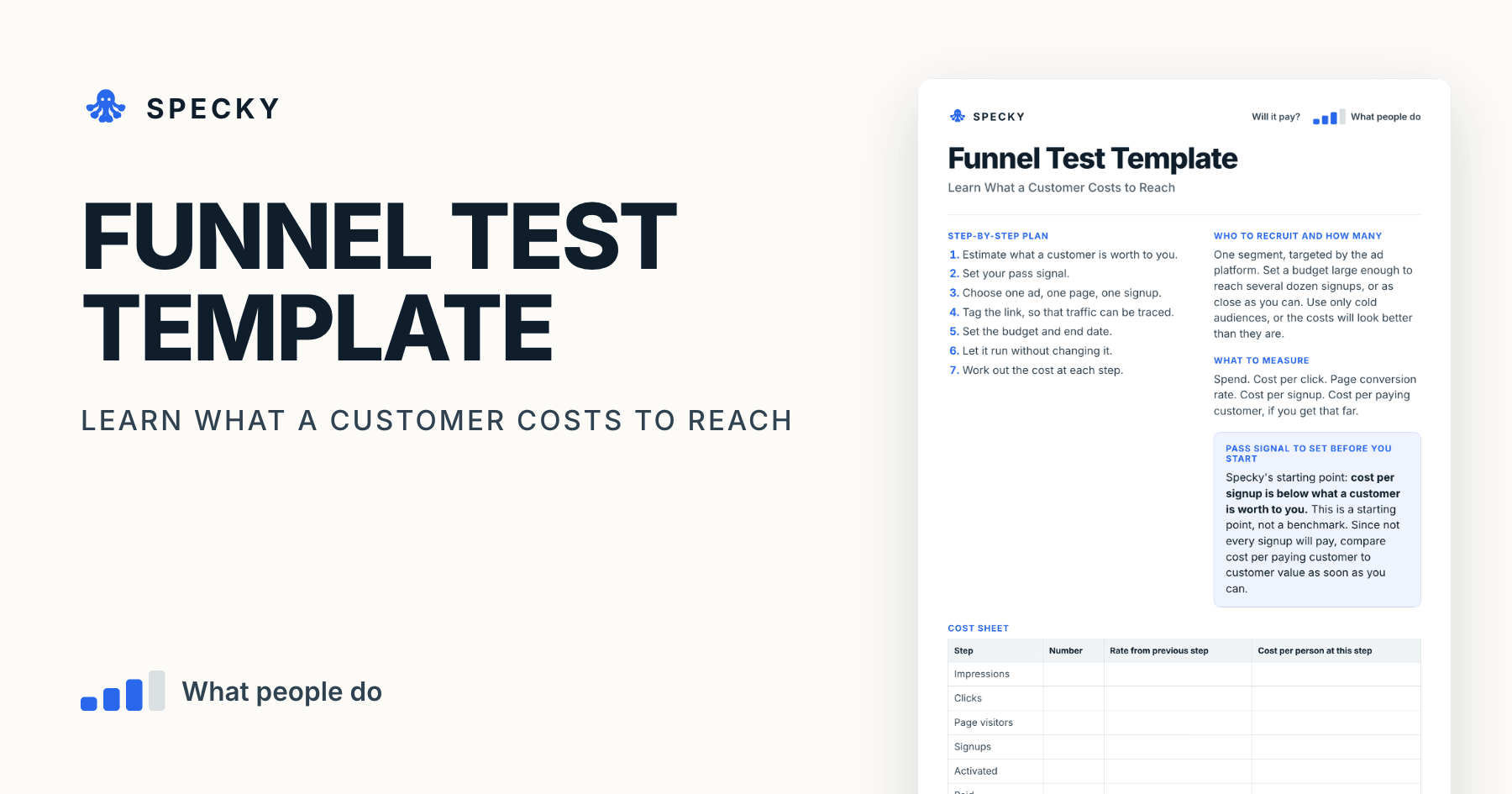
Plenty of products are loved by people who cost too much to reach. Find out what a customer really costs before you plan around it.
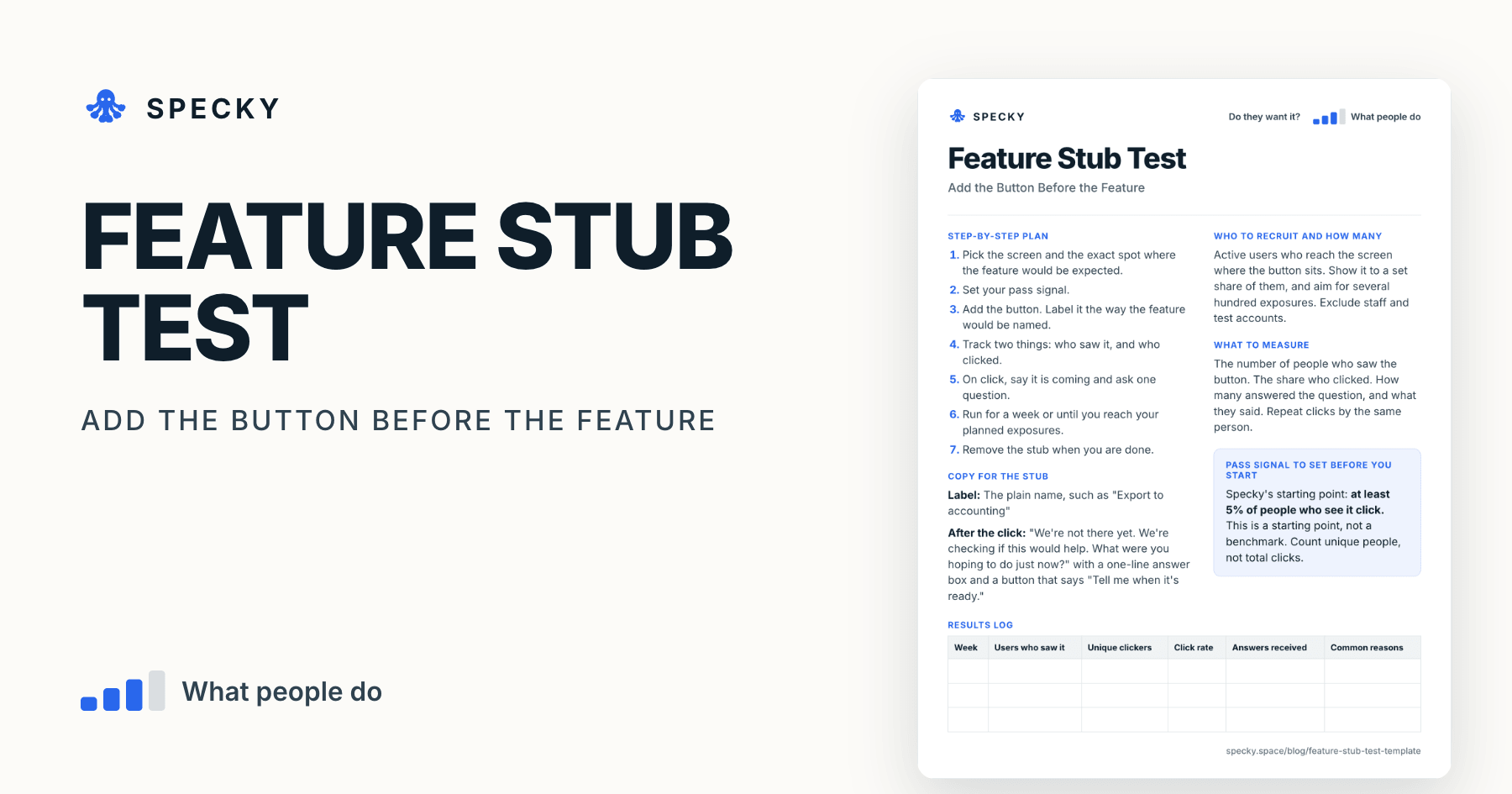
The best moment to learn if users want a feature is the moment they reach for it. Add the button first, and count who presses it.
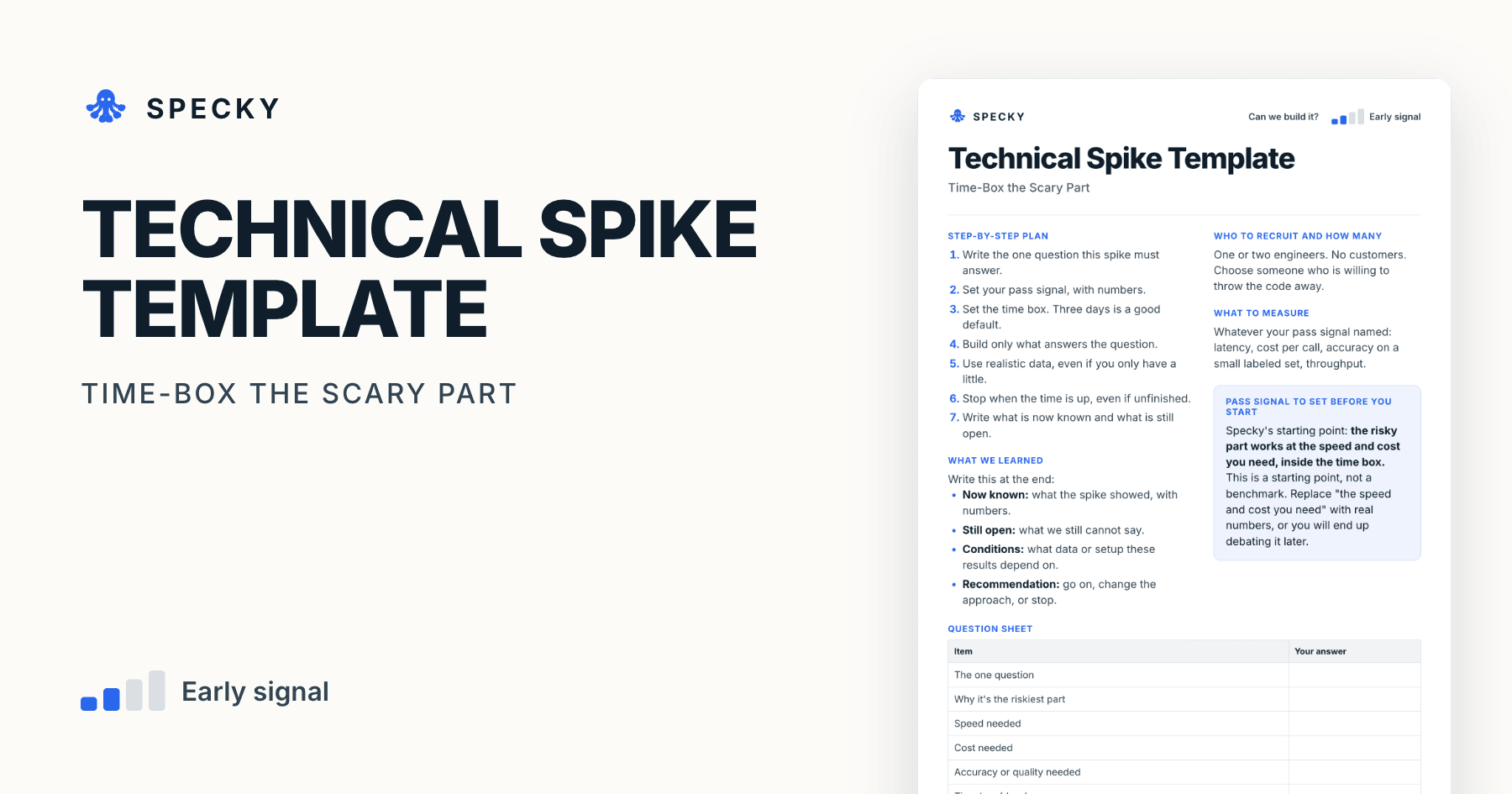
Three days of honest probing can save three months of building something impossible. Time-box the scary part and write down what you learn.

When an idea is hard to explain and slow to build, show it first. Then measure who watches past the midpoint, where they replay, and who signs up.
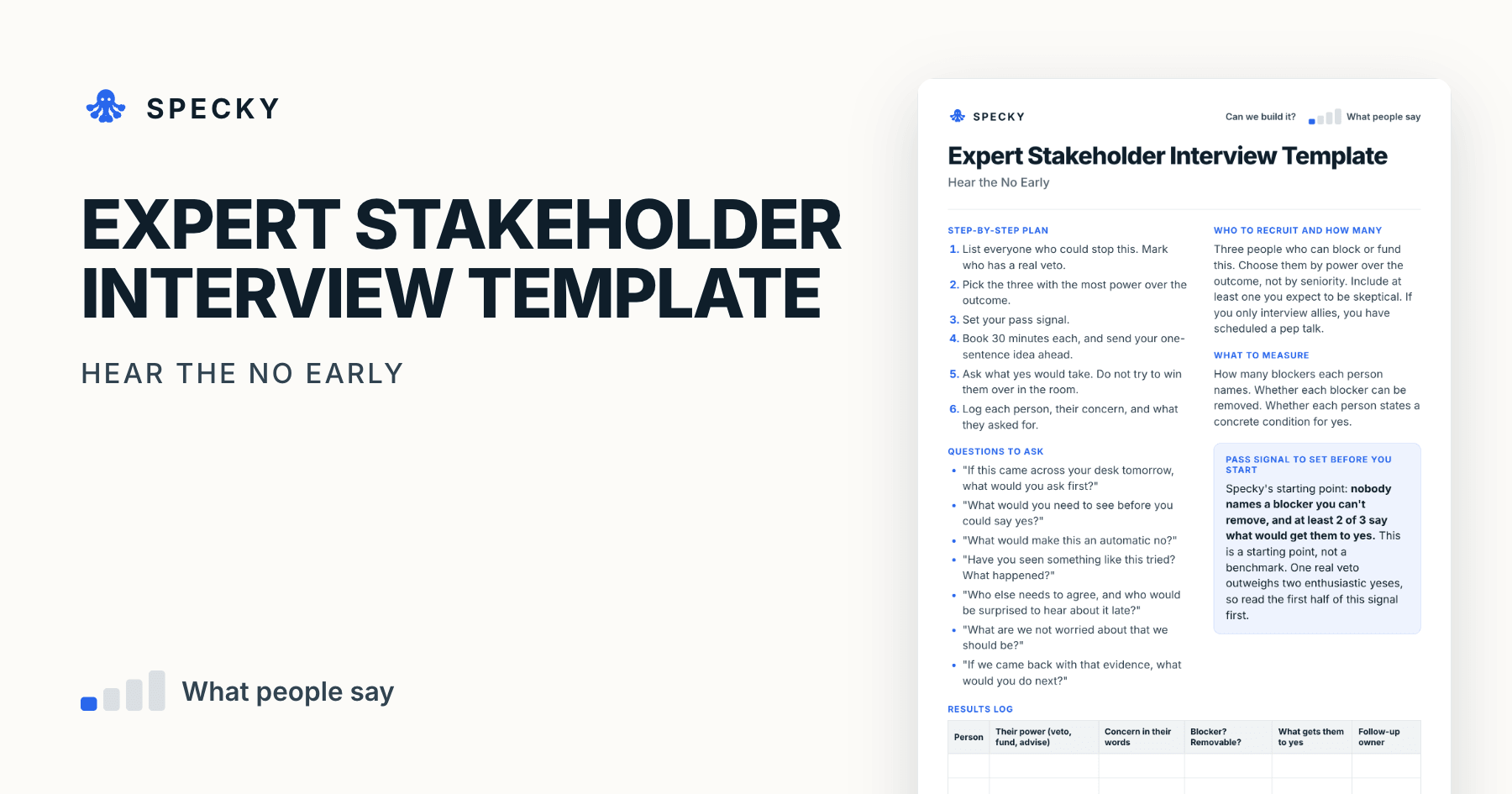
Hear the no while it is still cheap. Find out exactly what legal, security, finance or a domain expert would need to see before saying yes, then turn each condition into a test.
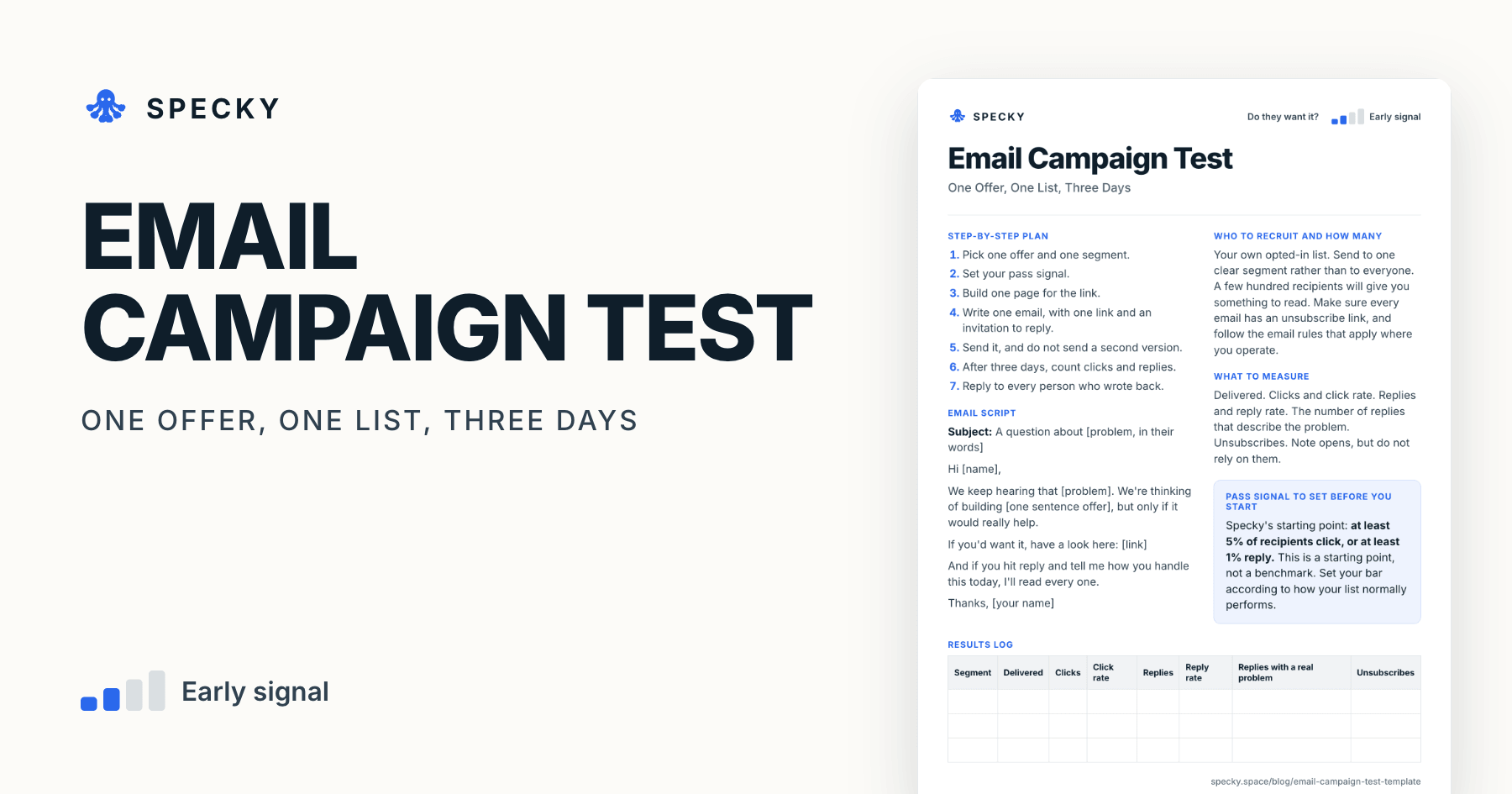
If people already chose to hear from you, you can test a new offer in three days. Count clicks and replies, ignore opens, and treat every reply as a conversation.
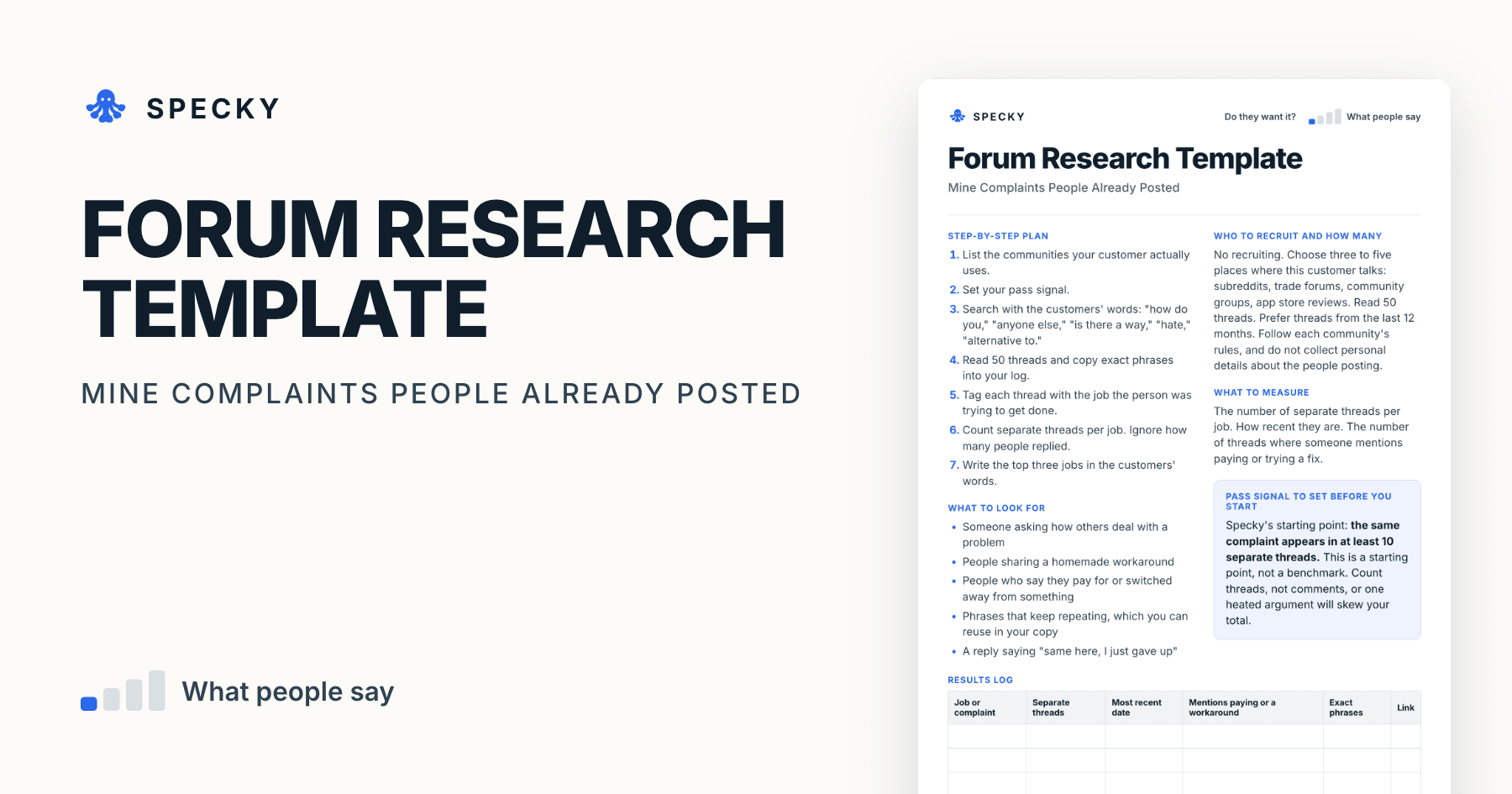
Your customers have already described the problem online, in their own words. Here is how to read it, count what repeats, and stay within each community's rules.