AI product management
Understand the AI product manager role, choose practical tools, and keep customer evidence in the loop.
Practical guides for founders, first PMs, product engineers, and product builders: discover customer problems, decide what to build, and ship with AI.
Field guides for small teams building software, AI products, and better product habits.
Understand the AI product manager role, choose practical tools, and keep customer evidence in the loop.
Connect customer evidence, small-team workflows, and AI feature delivery from the first problem through a useful release.
Decide where AI fits, define quality and risk, and improve the feature after launch.
Practical workflows for people close to the code: learn from users, choose a small bet, and give coding agents useful context.
Turn customer signals into a focused plan, and test whether people value what your team is building.
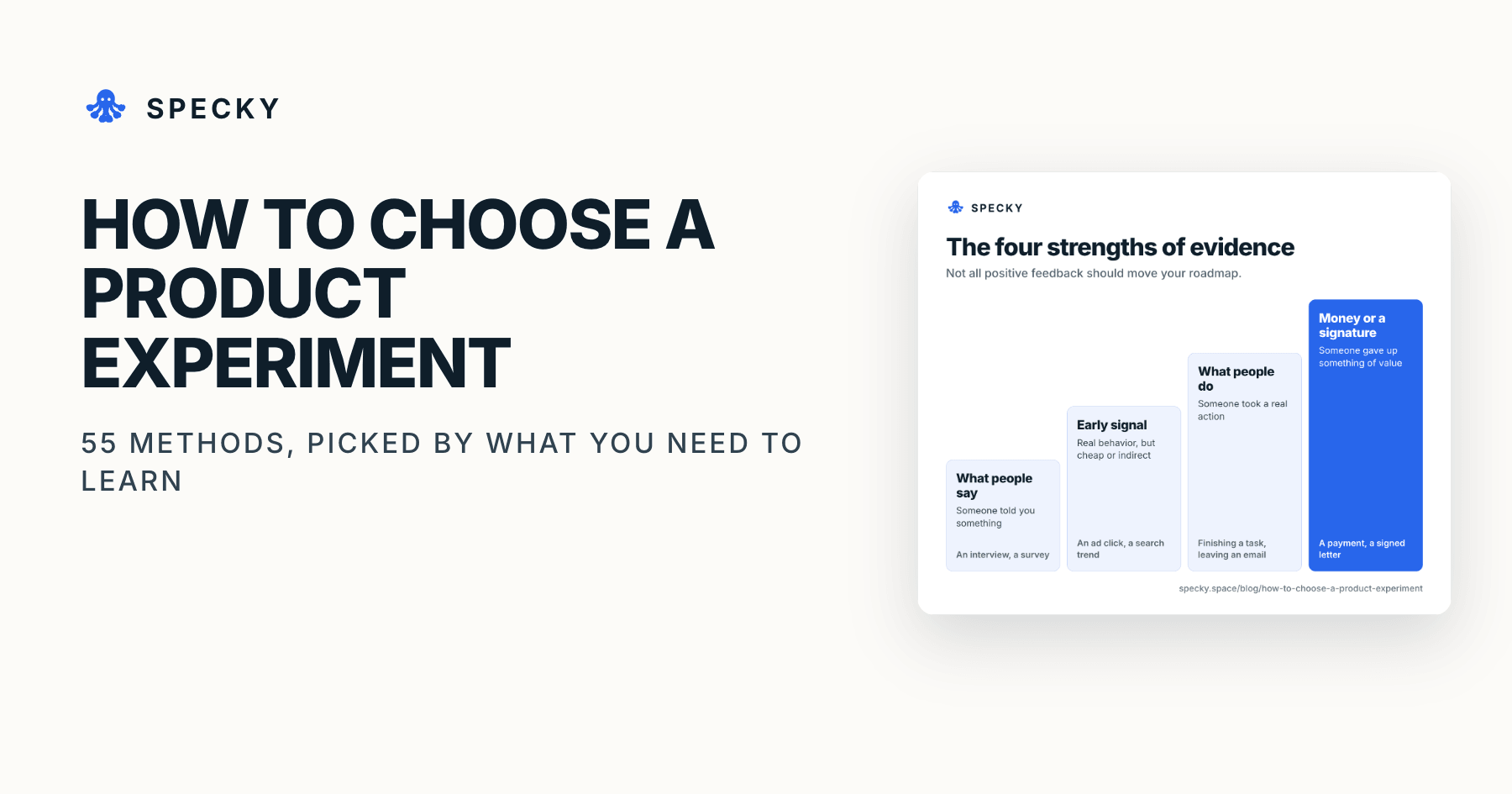
Most ideas lose when tested. Name the riskiest belief, decide how strong the evidence must be, then pick the cheapest of 55 product experiments that gets you there.
Practical guides, product frameworks, and Specky updates — sent when it’s worth your time.
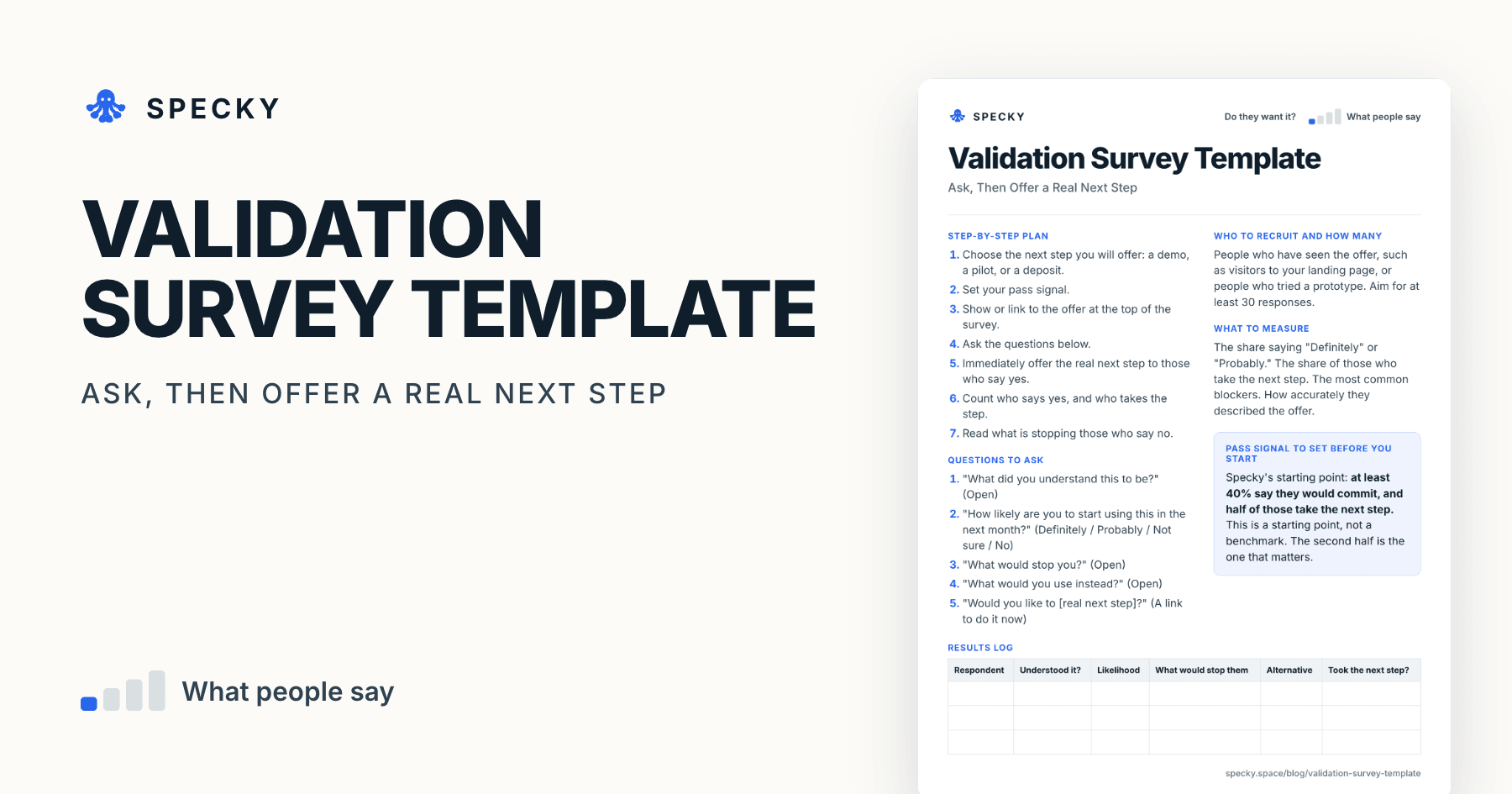
"Would you use this?" is a weak question on its own. Follow it with a real next step, and read the gap between what people say and what they do.
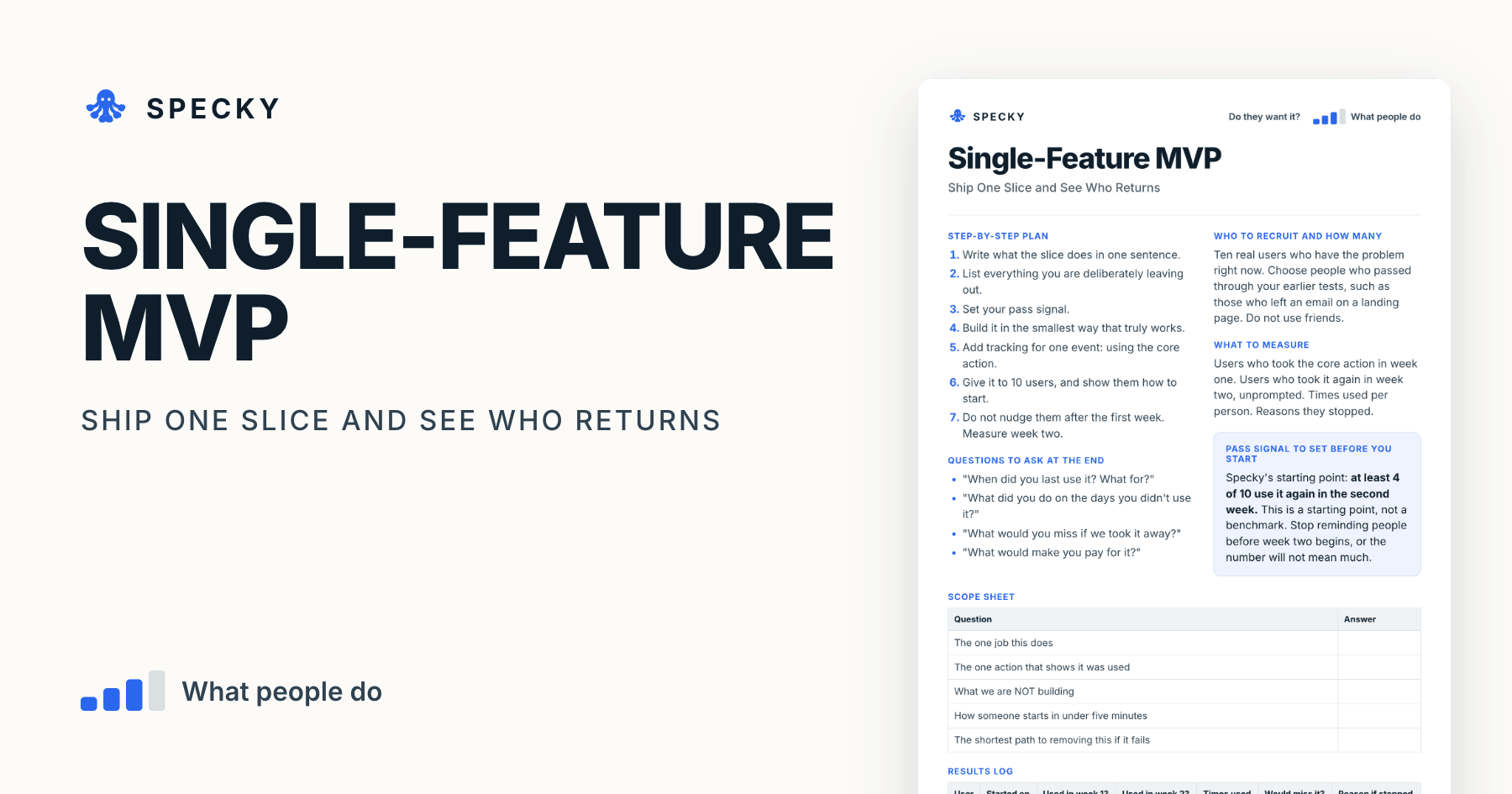
An MVP is not a small product. It is one slice and one question: do people come back?
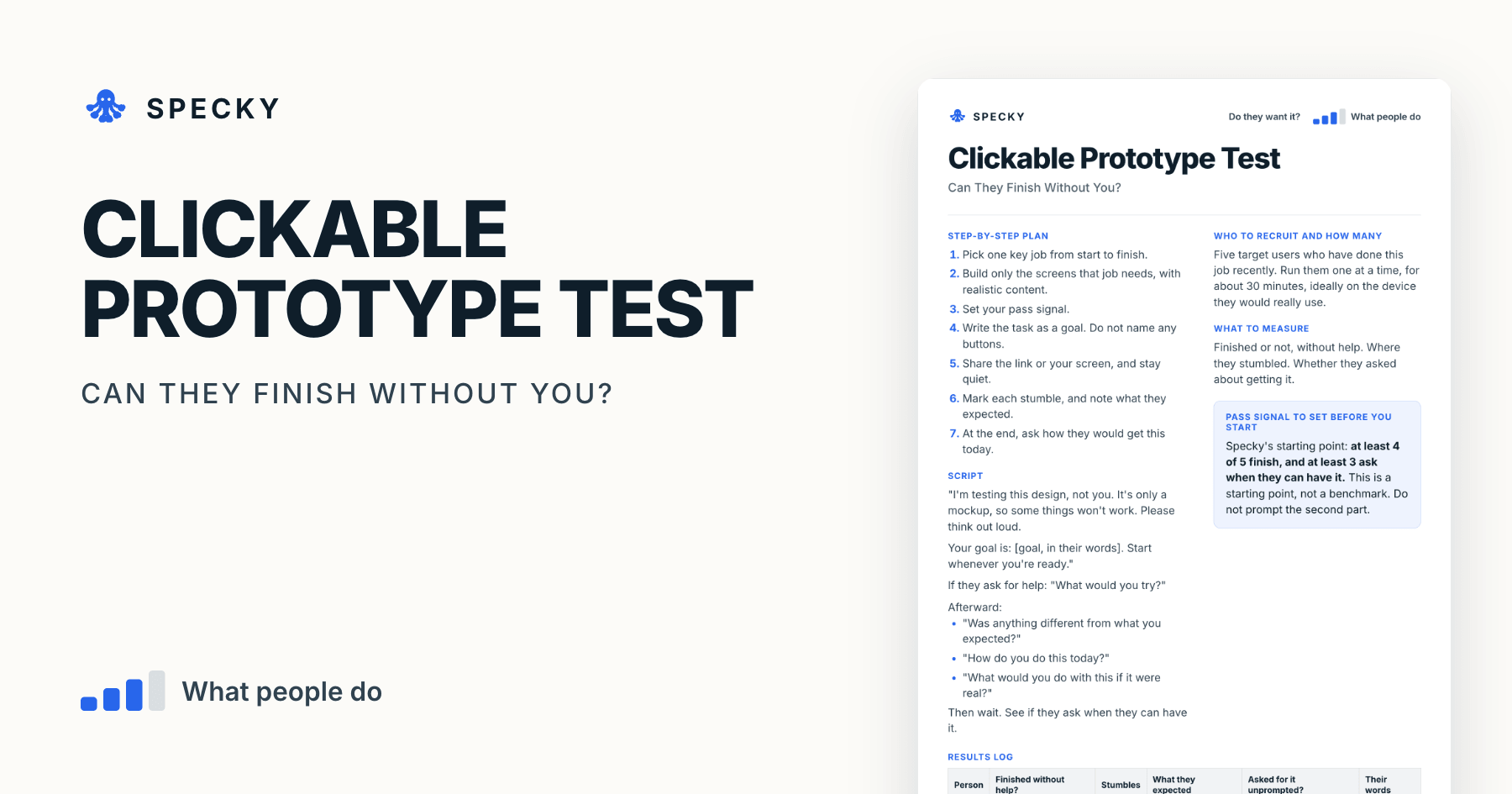
Your prototype will pass every test if you help it. Here is how to find out whether people can finish without you, and whether anyone asks for it.
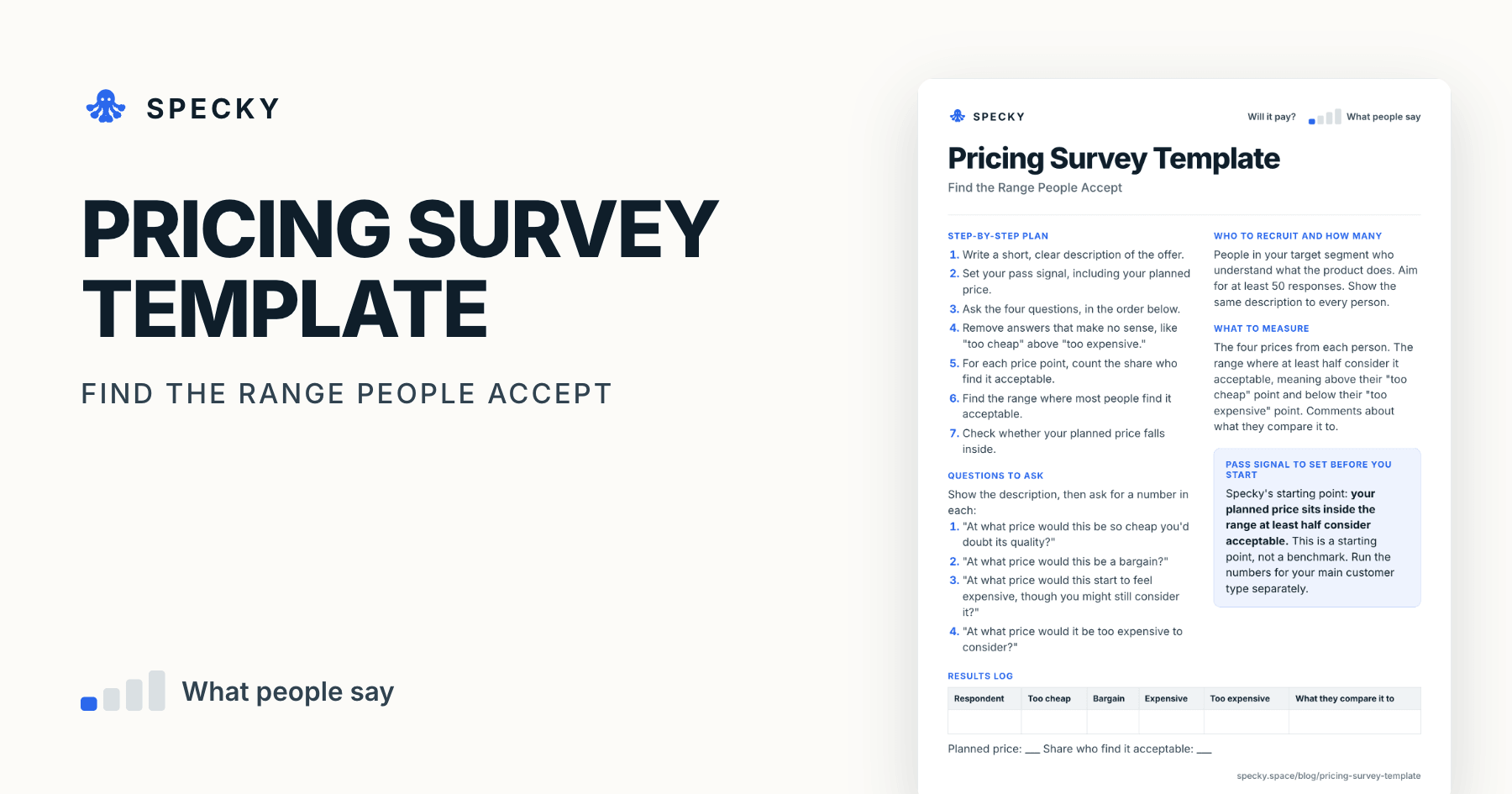
Stop guessing what to charge. Four questions give you a range of prices people accept, ready to test with a real offer. Here is how to ask them and how to read the answers.
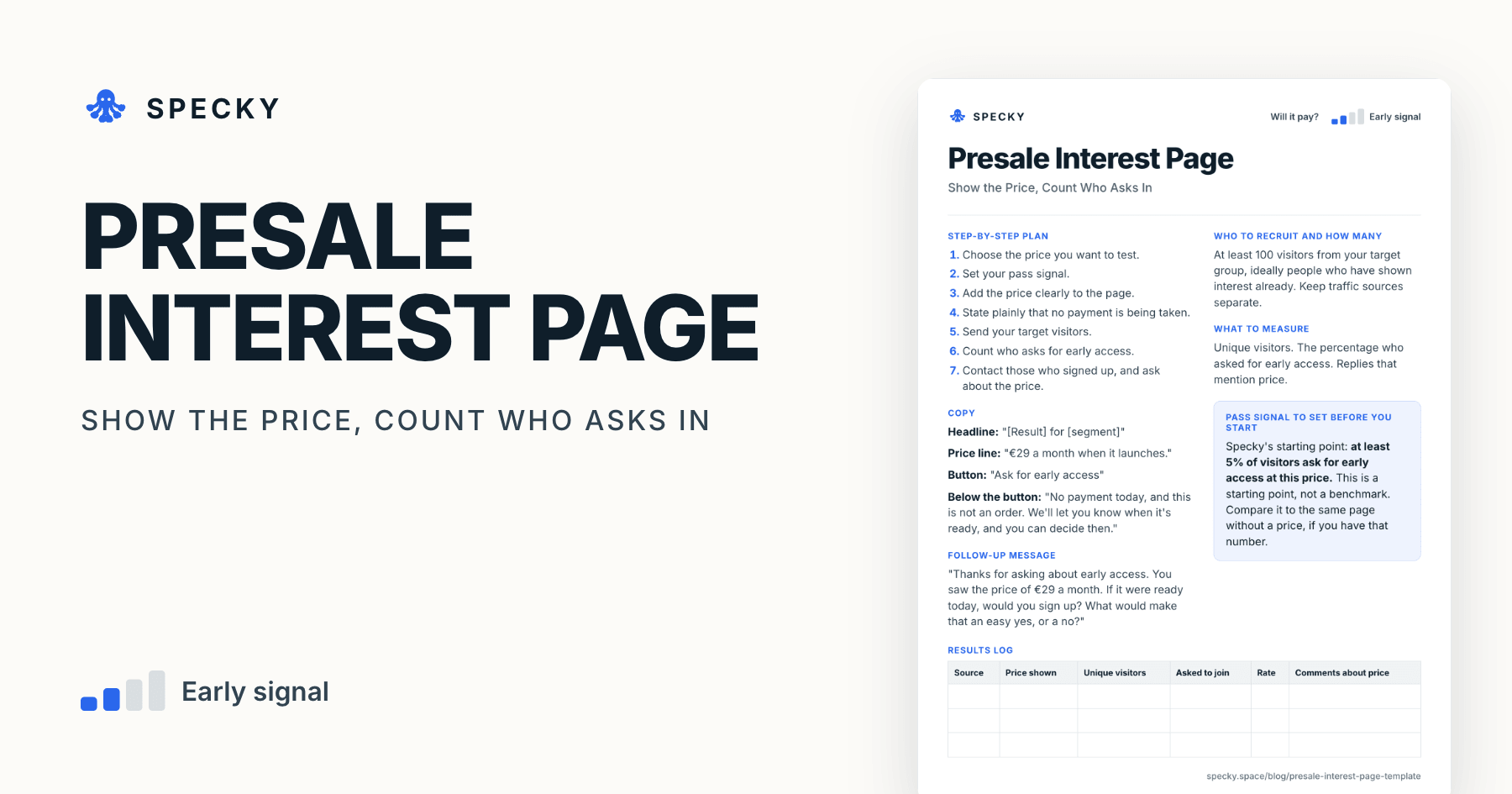
Interest is easy when the price is hidden. Put the number on the page, say plainly that no payment is taken, and count who still asks to join.
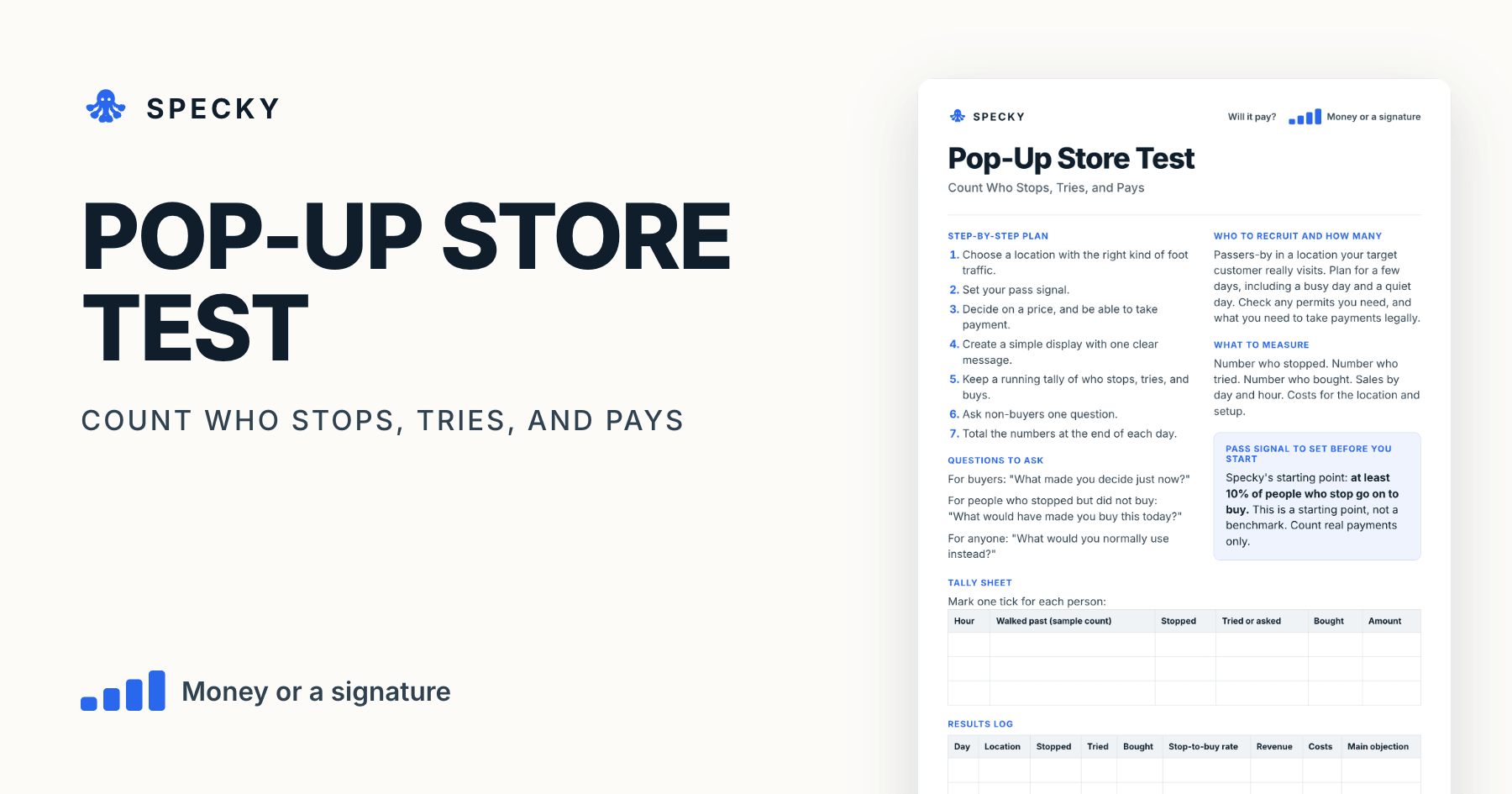
Nothing teaches you like watching a stranger decide whether to pay. Count who stops, who tries, and who buys.
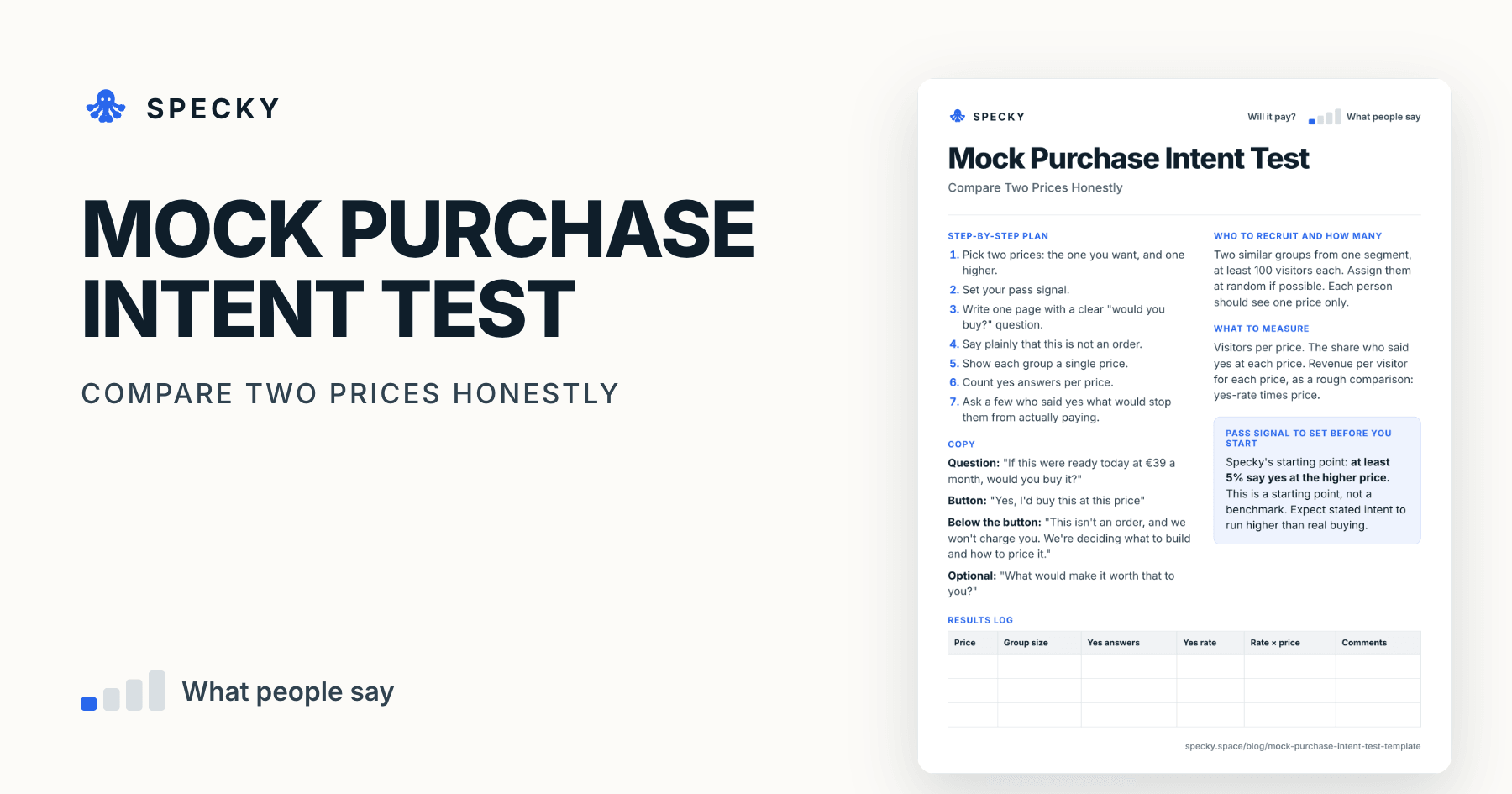
Compare two prices in about a week without selling anything, as long as you say plainly that no order is being placed and read every yes as a stated intent.
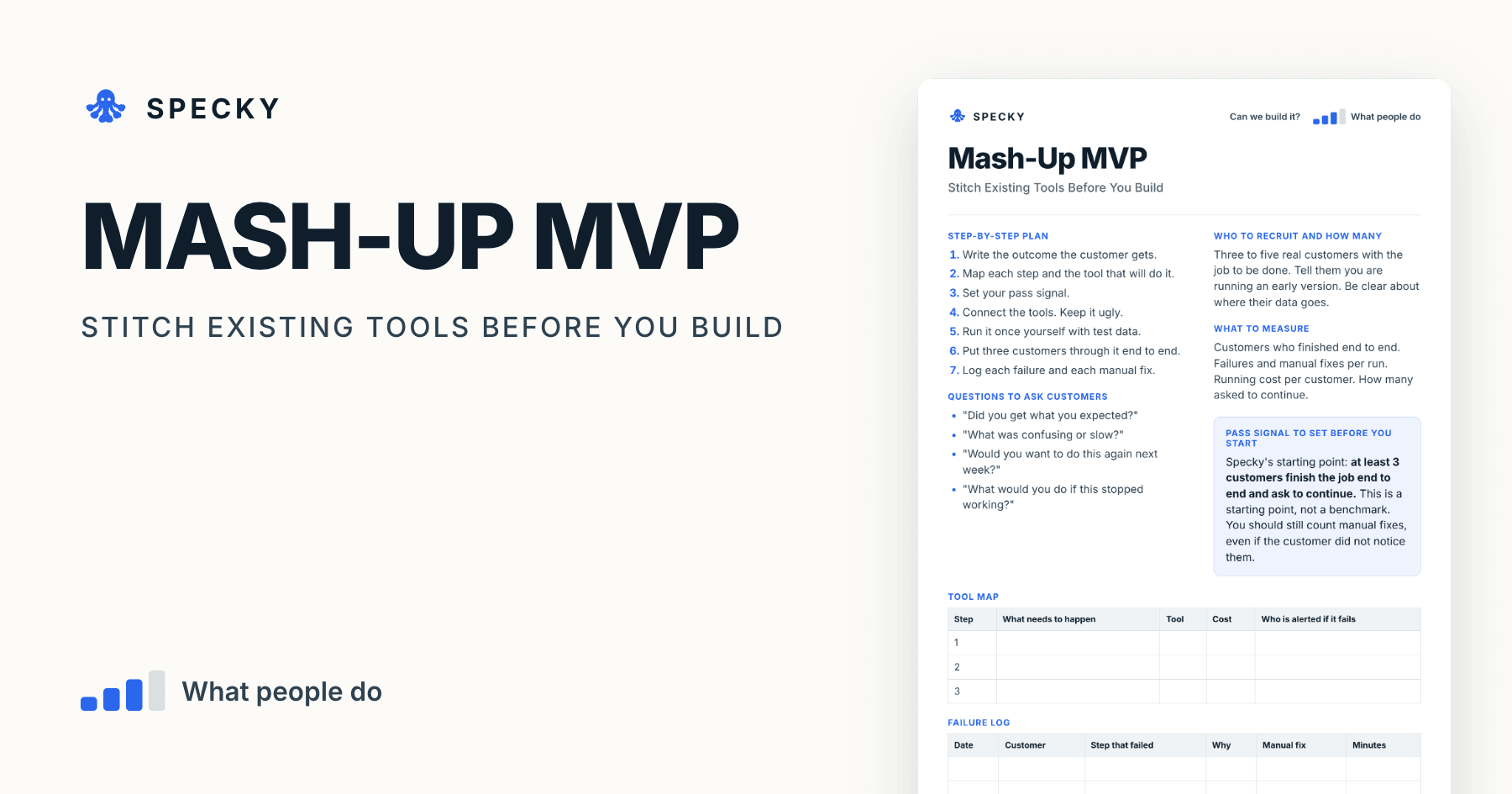
Your product might already exist as five tools taped together. Prove the whole chain works before you build any of it.