AI product management
Understand the AI product manager role, choose practical tools, and keep customer evidence in the loop.
Practical guides for founders, first PMs, product engineers, and product builders: discover customer problems, decide what to build, and ship with AI.
Field guides for small teams building software, AI products, and better product habits.
Understand the AI product manager role, choose practical tools, and keep customer evidence in the loop.
Connect customer evidence, small-team workflows, and AI feature delivery from the first problem through a useful release.
Decide where AI fits, define quality and risk, and improve the feature after launch.
Practical workflows for people close to the code: learn from users, choose a small bet, and give coding agents useful context.
Turn customer signals into a focused plan, and test whether people value what your team is building.

When an idea is hard to explain and slow to build, show it first. Then measure who watches past the midpoint, where they replay, and who signs up.
Practical guides, product frameworks, and Specky updates — sent when it’s worth your time.
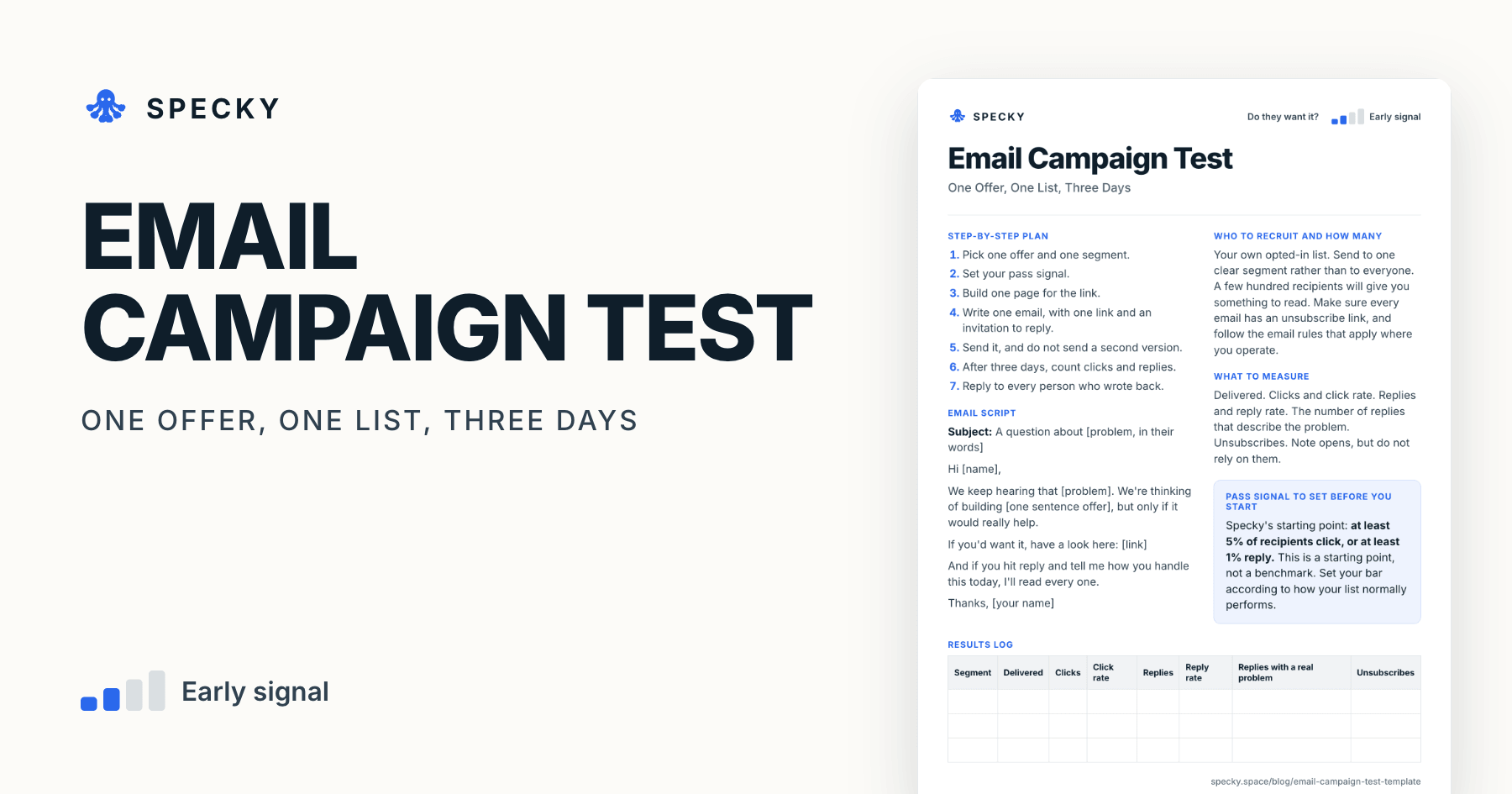
If people already chose to hear from you, you can test a new offer in three days. Count clicks and replies, ignore opens, and treat every reply as a conversation.
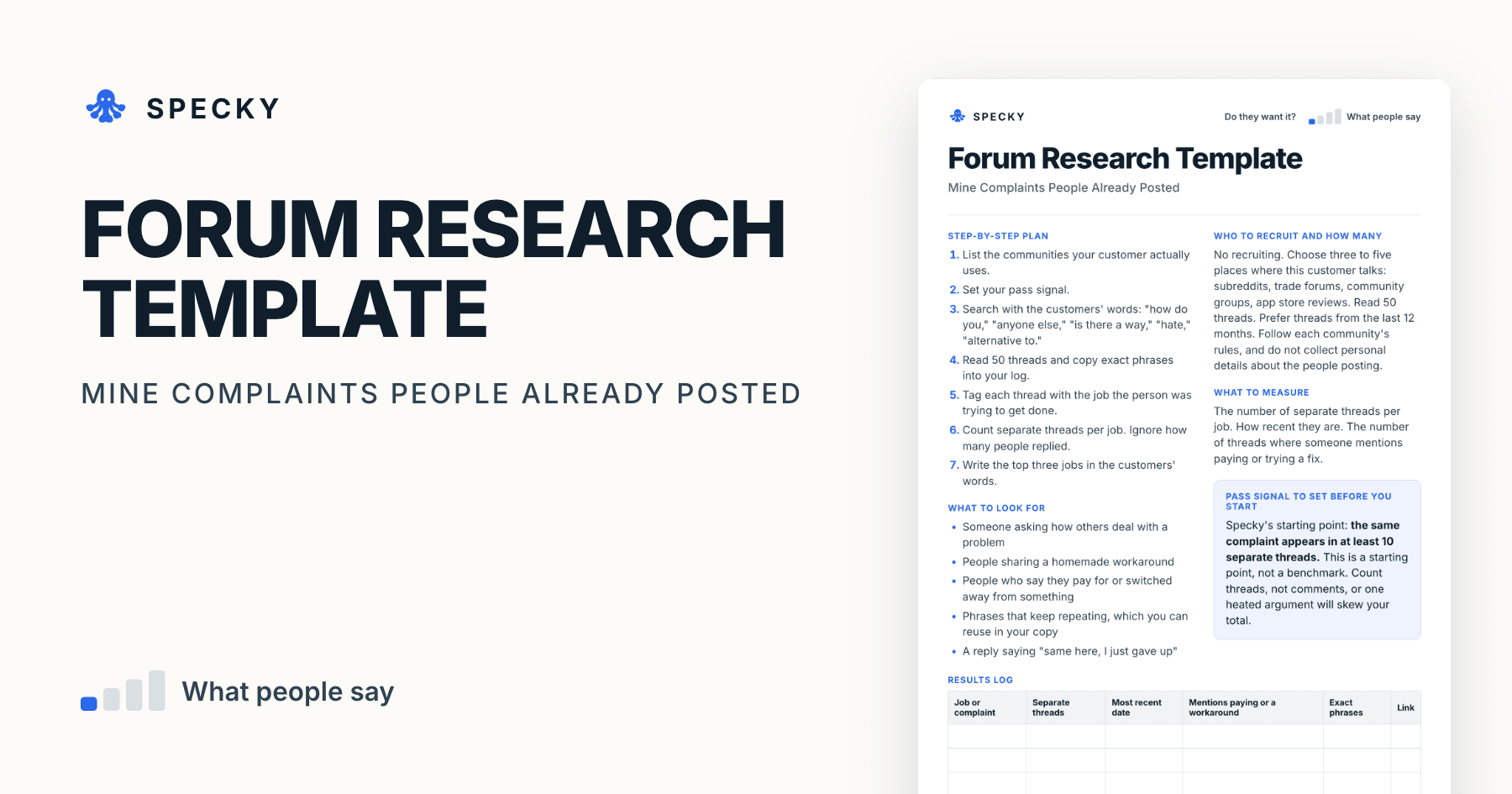
Your customers have already described the problem online, in their own words. Here is how to read it, count what repeats, and stay within each community's rules.
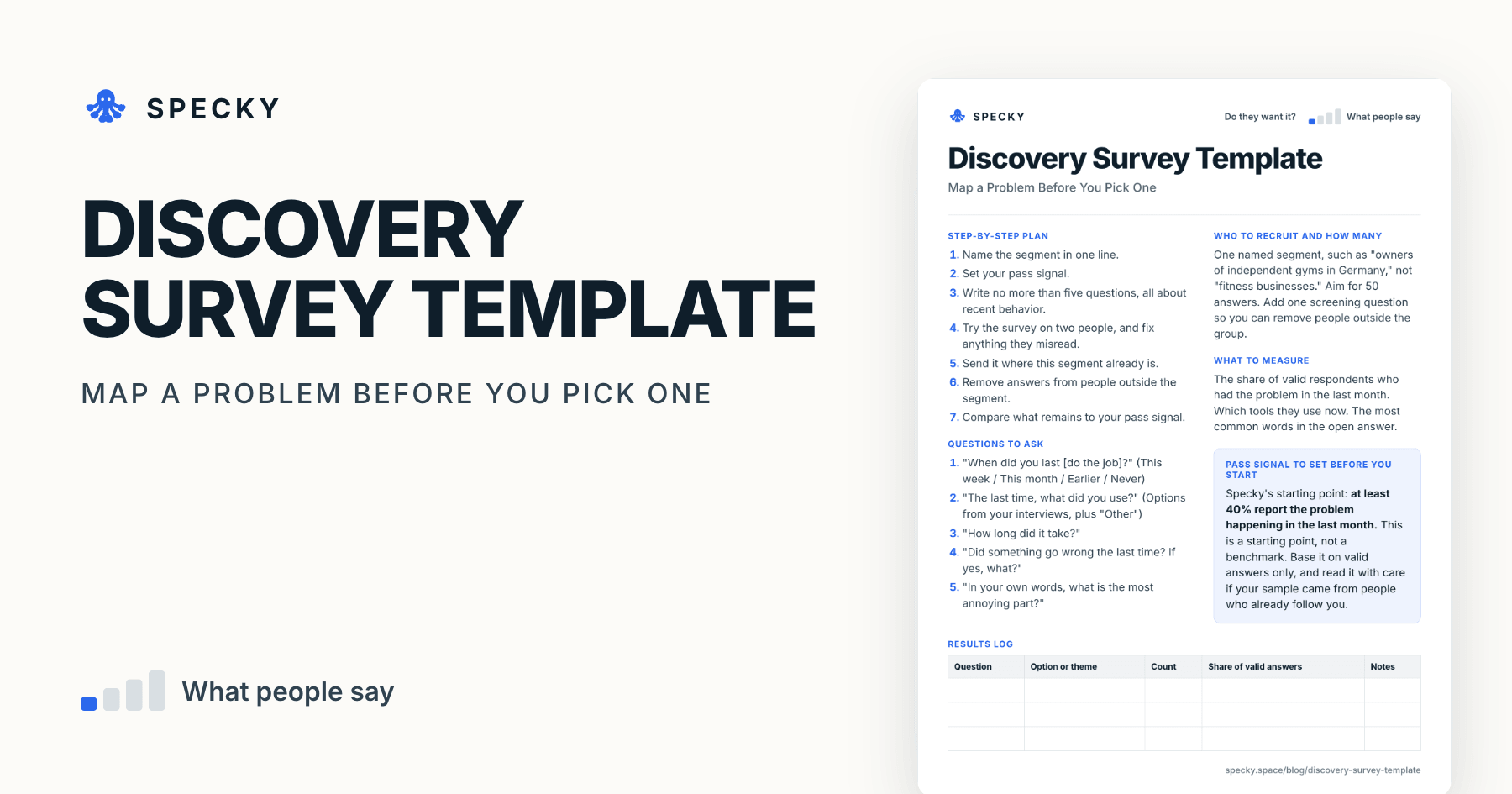
Find out how common a problem really is in one named group, using five questions about what people actually did, and know how much to trust the number.
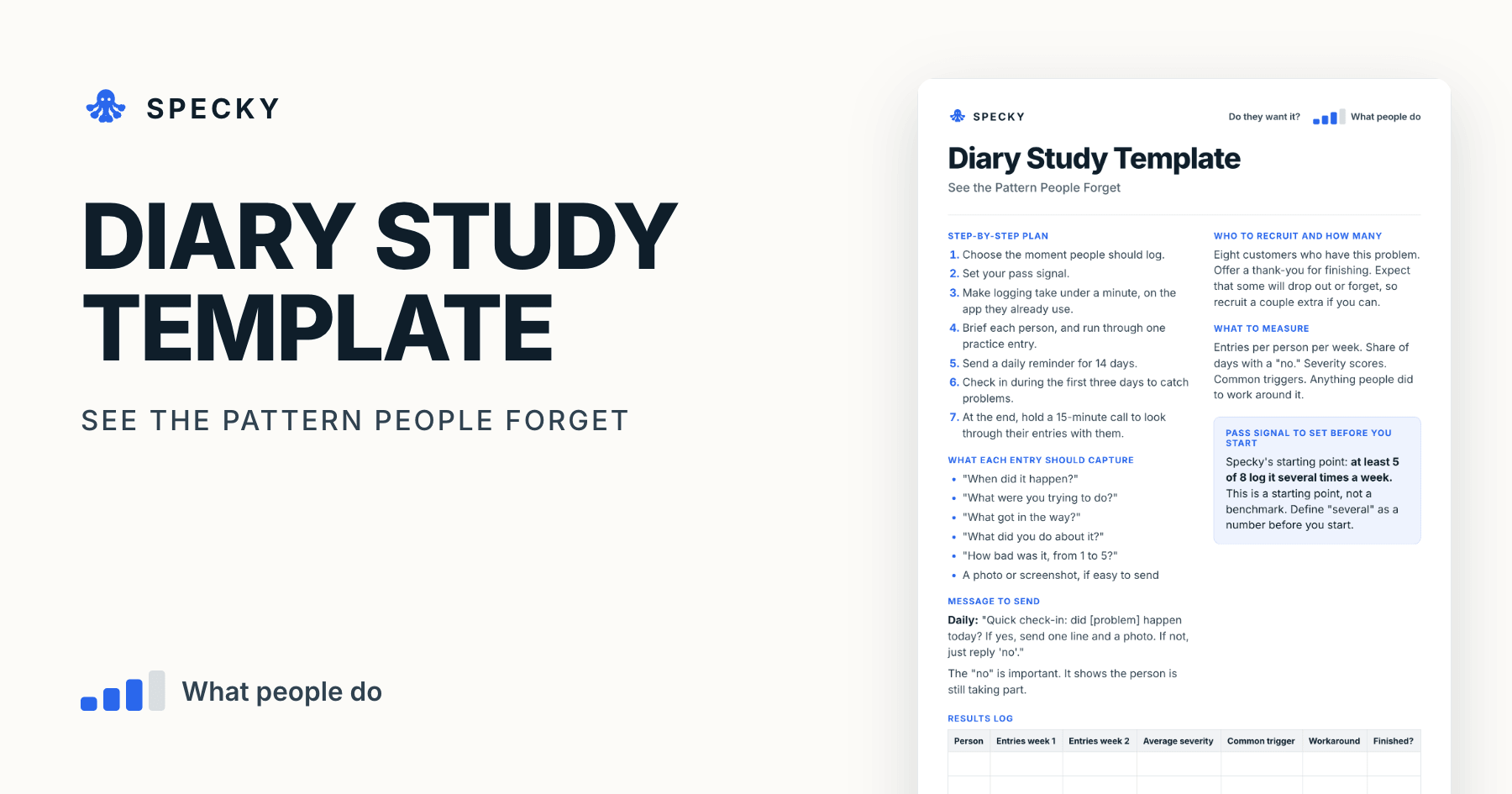
"It happens all the time" often turns out to mean once a week. A diary study has people log it as it happens, so you see the real pattern.
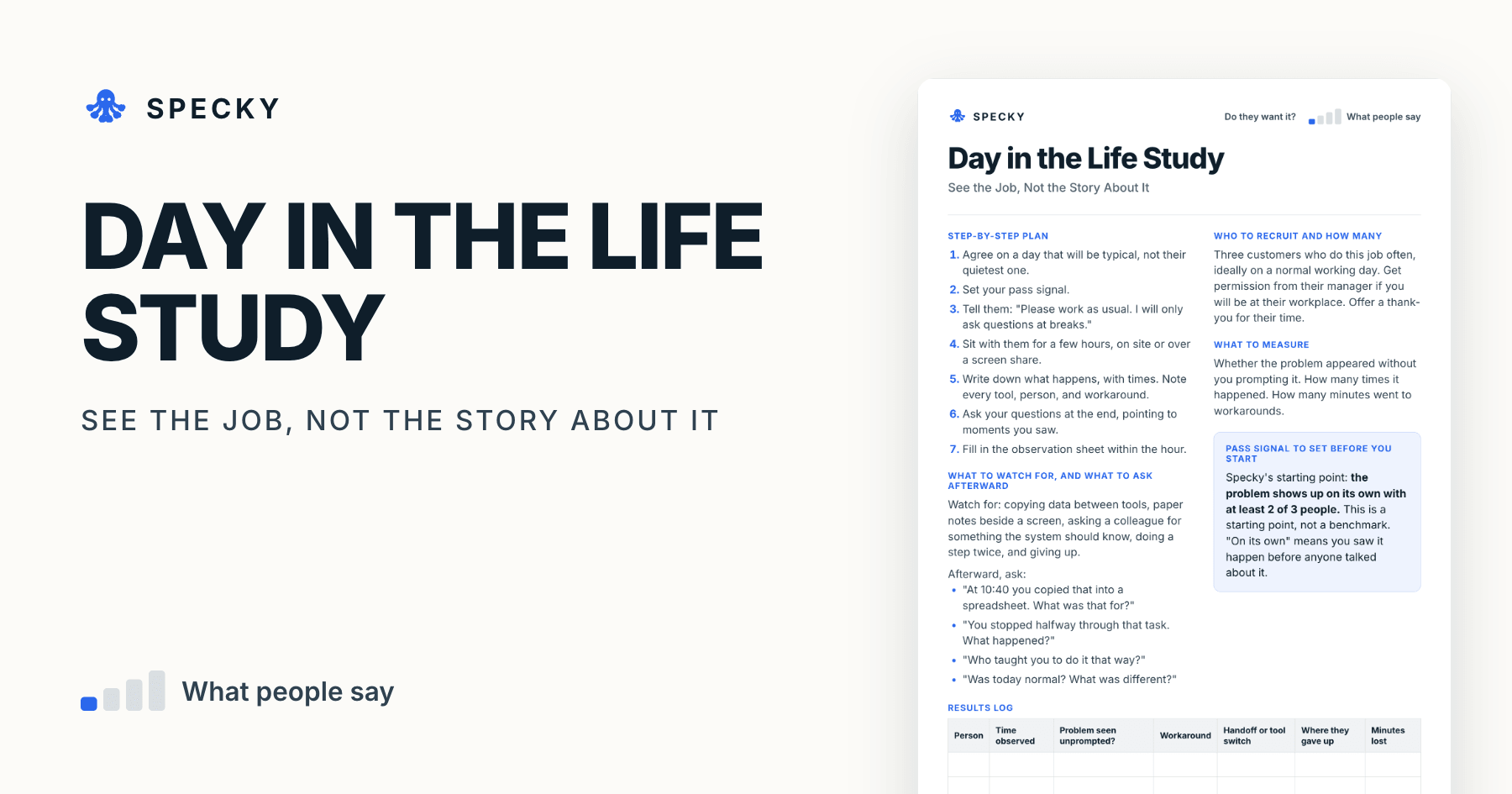
People cannot describe work they do on autopilot. Spend a morning watching the real job and see the workarounds, handoffs and give-ups nobody mentions.
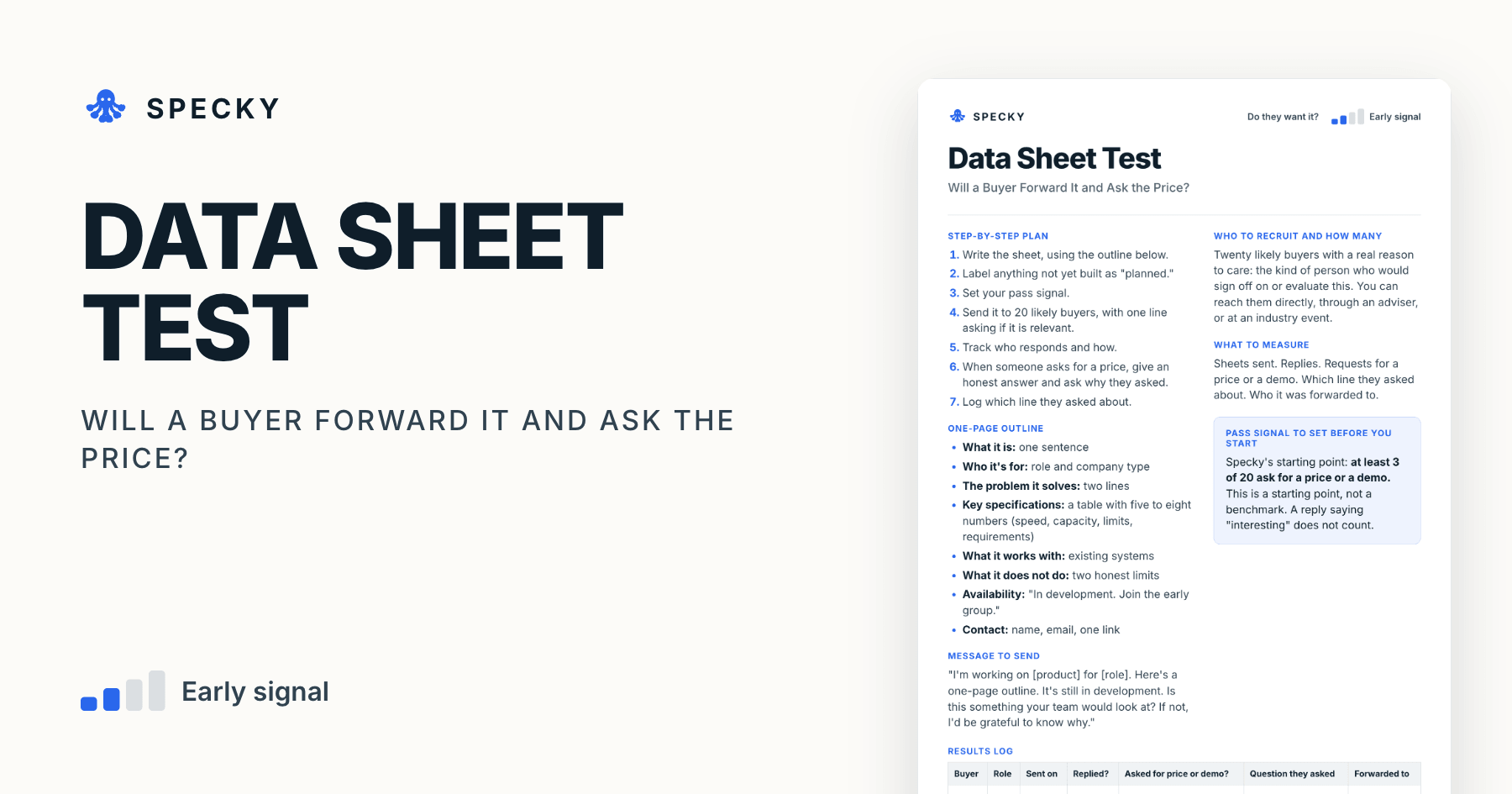
Serious buyers want numbers. Write a single page they could forward to a colleague, label what is planned, and see who asks for a price.
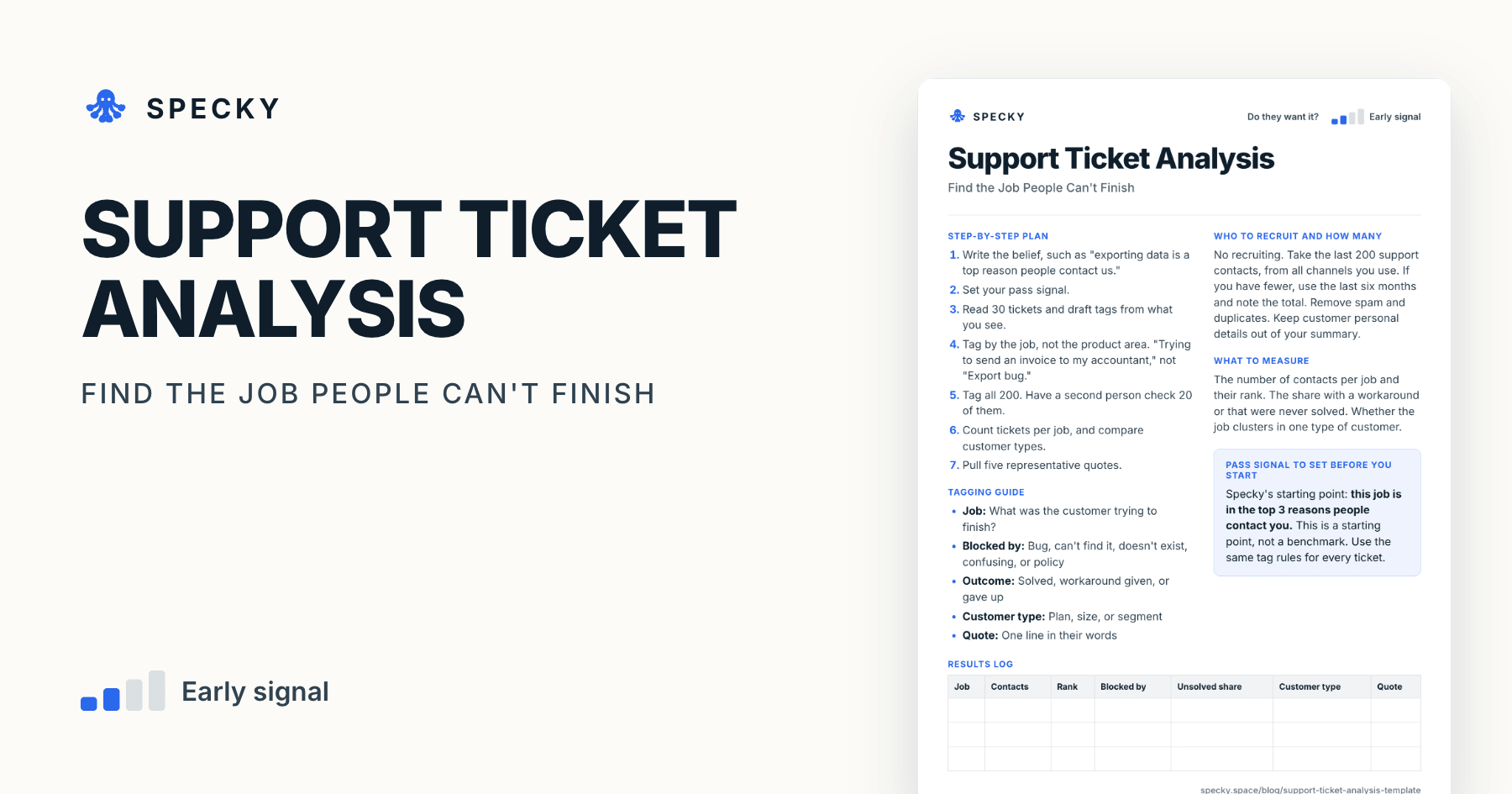
Your support inbox is research you already paid for. Tag it by what customers were trying to do, check the tags hold up, and see what hurts most.
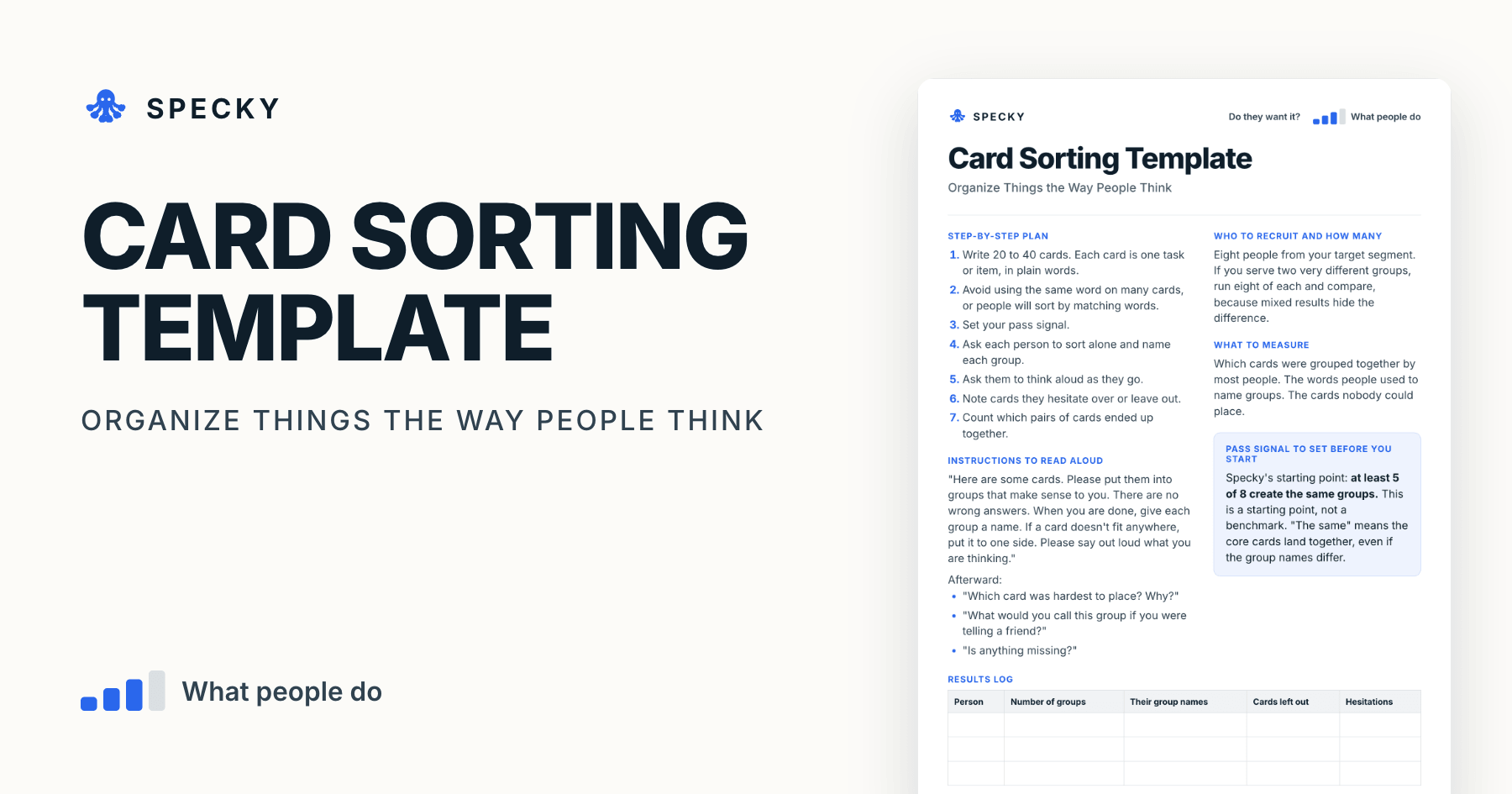
Your menu only makes sense to you because you built it. Let people group things their own way, and build what they already expect.